


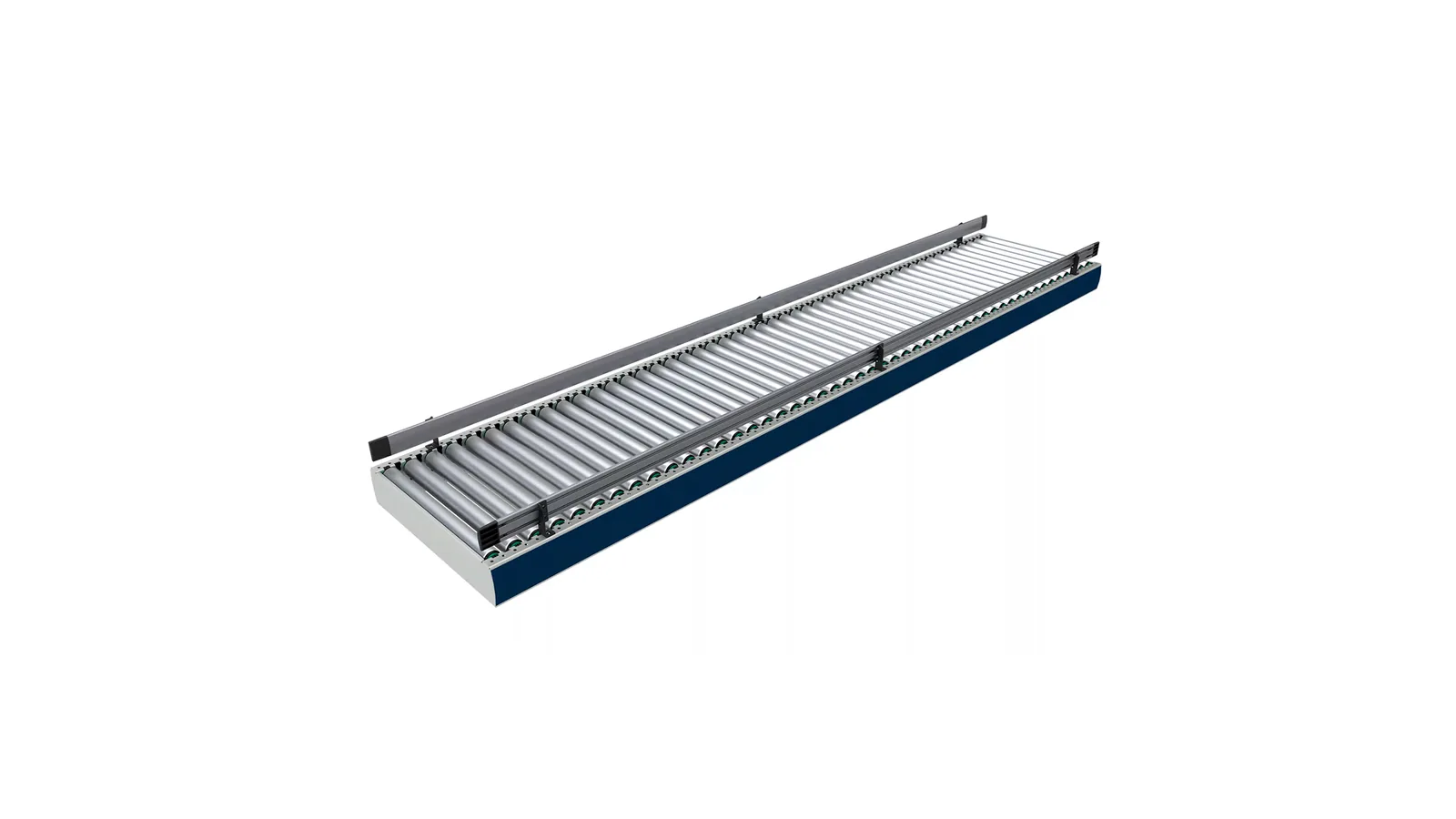
Straight roller conveyor
The straight section is installed at an angle or horizontally. On an incline, the load speed increases in proportion to the slope.
Components
- Steel frame
- Straight gravity rollers
- Side guides

 Request a call
 Warehouse RackingPallet, shelving, cantilever and drive-in racking, plus mezzanines
 Material Handling EquipmentForklifts, stackers, reach trucks and electric pallet trucks
 Warehouse AutomationConveyors, roller conveyors, sorters and warehouse lifts
 Plastic ContainersPlastic boxes and containers for storage and order picking
 Powered Roller Conveyors
 Gravity Roller Conveyors
 Belt Conveyors
 Warehouse Sorters
 Warehouse Lifts
 Conveyor Transfers
 Coming soonThis section will open shortlyRequest a call
Warehouse RackingPallet, shelving, cantilever and drive-in racking, plus mezzanines
Material Handling EquipmentForklifts, stackers, reach trucks and electric pallet trucks
Warehouse AutomationConveyors, roller conveyors, sorters and warehouse lifts
Plastic ContainersPlastic boxes and containers for storage and order picking
Powered Roller Conveyors
Gravity Roller Conveyors
Belt Conveyors
Warehouse Sorters
Warehouse Lifts
Conveyor Transfers
Coming soonThis section will open shortlyRequest a call
Unpowered roller lines for boxes and trays up to 50 kg: straight, curved and corner sections and buffer zones – simple, reliable and no electricity needed.

Gravity (non-powered) roller conveyors have no drive of their own: the load moves under its own weight thanks to a correctly chosen section incline. They are used as buffers on conveyor lines, in connecting sections and at end stations. They are designed for loads that keep their shape: cartons, trays and boxes weighing up to 50 kg.
How it works
The line does not depend on the mains supply.
The cheapest way to automate the movement of boxes.
On conveyor lines, in connecting sections and at end stations.
30–90° curve sections and angled segments.
Curve sections with different angles and angled segments give great freedom in layout design.
The straight section is installed at an angle or horizontally. On an incline, the load speed increases in proportion to the slope.
Components
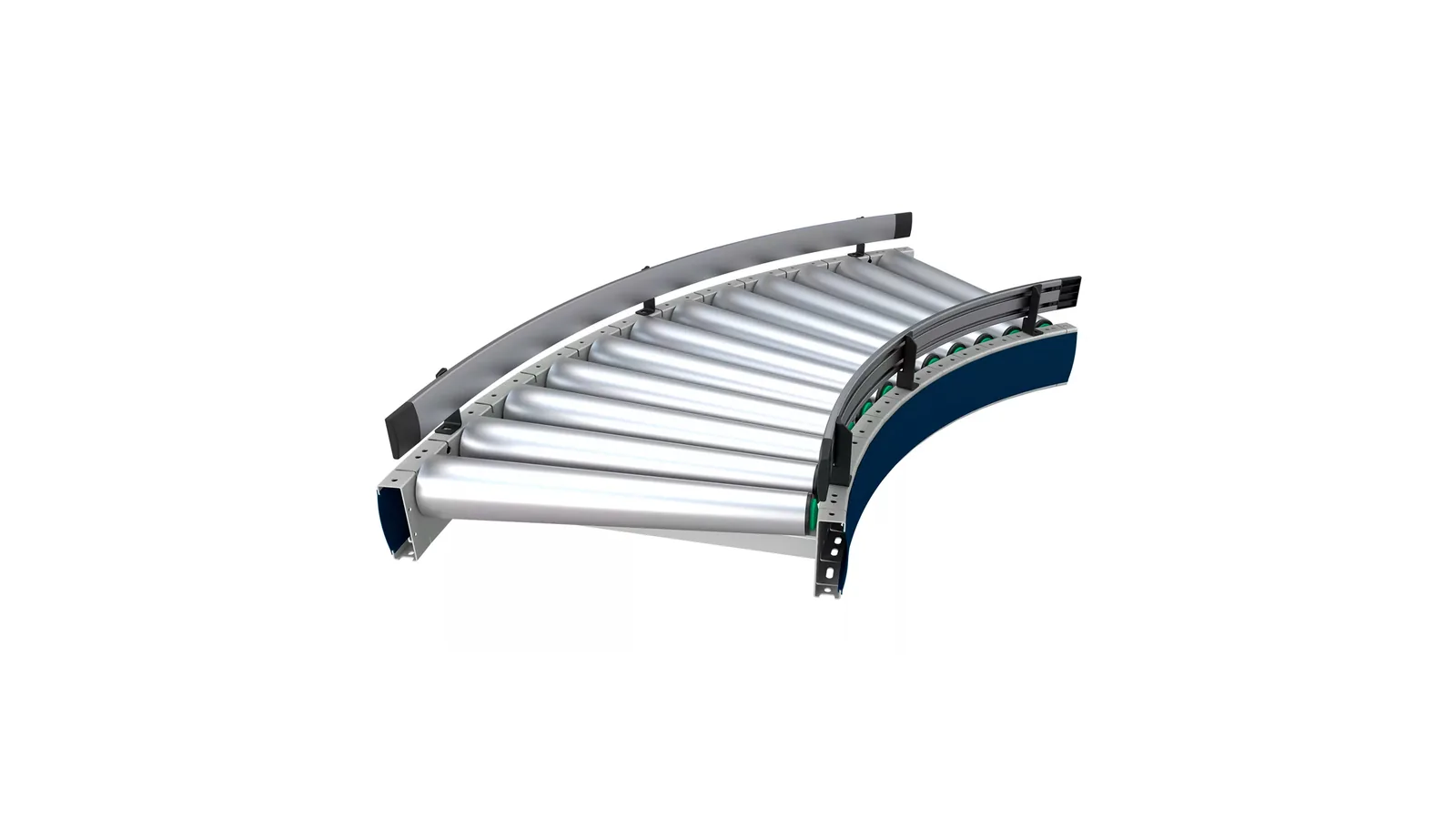
Change the direction of travel. Installed at an angle or horizontally; the frame is curved at 30°, 45°, 60° or 90°.
Components
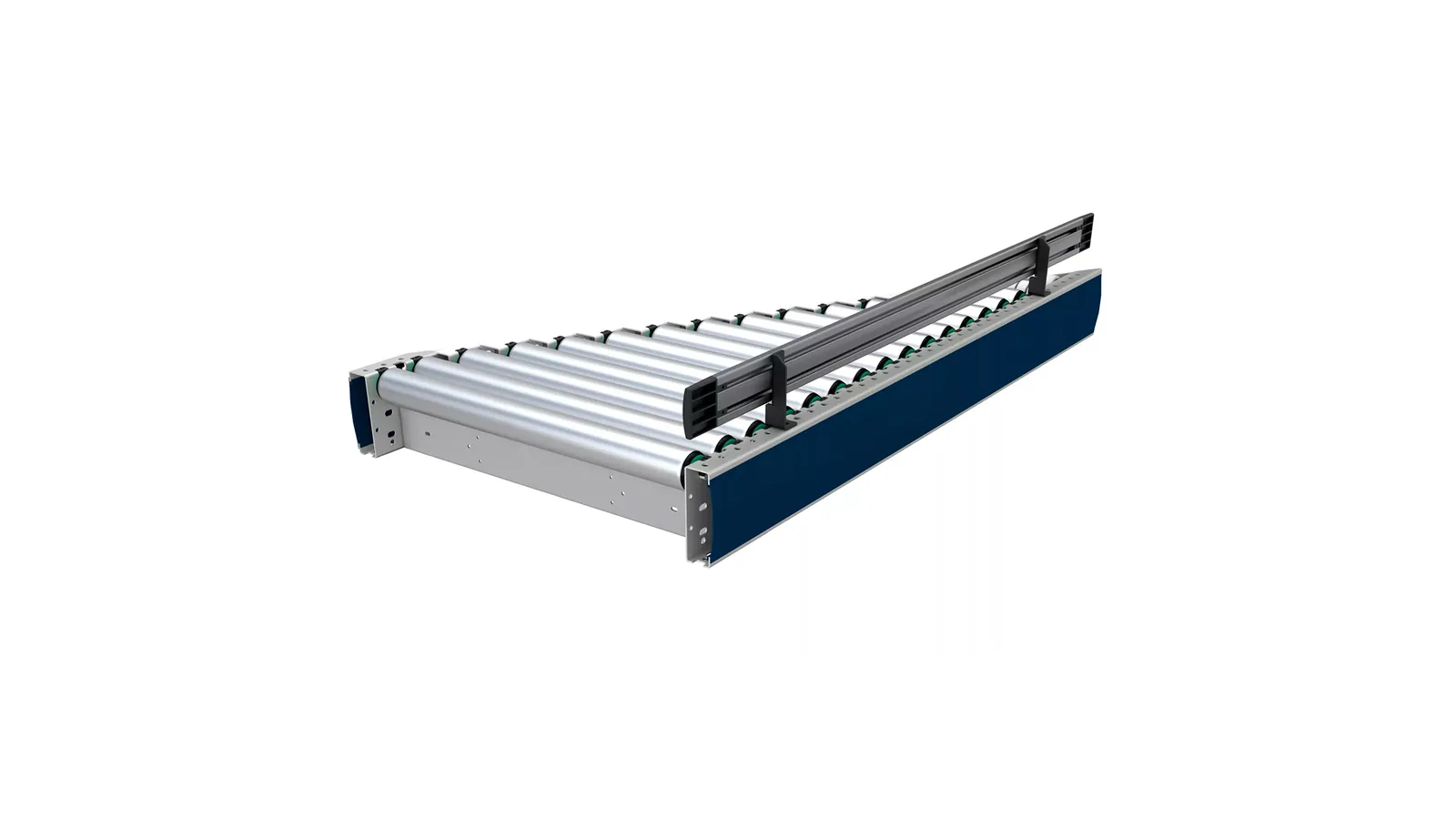
Merge loads onto the main line or divert them to secondary lines. Frame angle: 30° or 45°.
Components
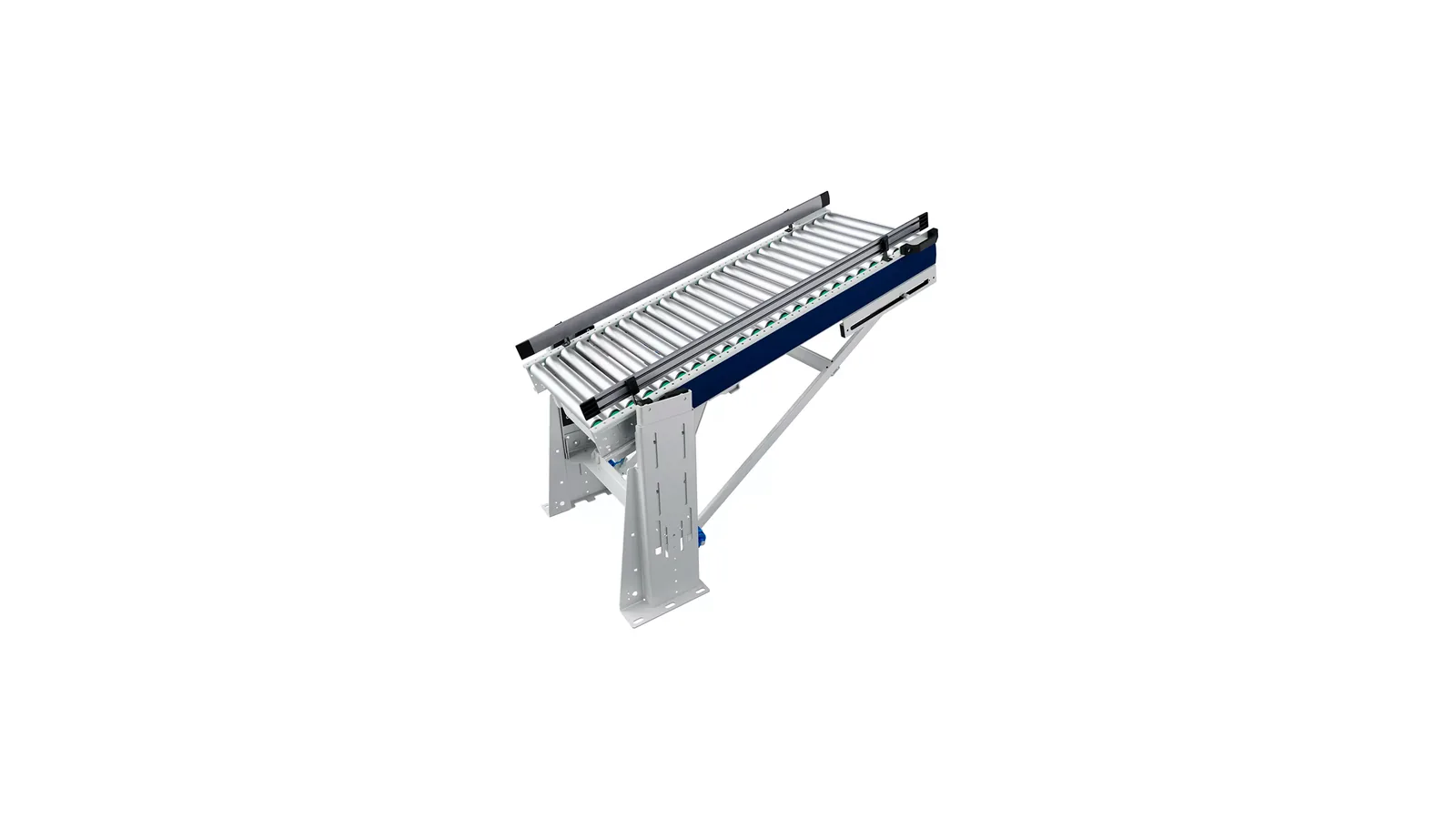
Lets people walk through the main line: when the gate is raised, the flow stops and resumes once it is lowered.
Components
A good fit when
Another solution is better when
Compare all solutions by flow, distance and number of destinations in the table "How to choose the level of automation".
We will calculate the incline, section lengths and buffer zones for your load and flow, and combine gravity sections with powered ones wherever control is needed.
Calculate your line Racking
Shelving
Feeding boxes to the picking area
 Automation
Powered Roller Conveyors
Automated line sections
A transparent process, with no juggling between separate suppliers and installers. You know what is happening at every step.
Start with a consultationWe clarify your needs, advise and make a preliminary equipment selection.
We measure and fully assess the warehouse: geometry, floor, aisles, work zones.
We produce drawings, a layout plan and a specification.
We select handling equipment and other equipment to suit the racking system.
We agree delivery and payment terms and sign the contract.
We manufacture racking systems and automation equipment.
We deliver structures and equipment to your site anywhere in Ukraine.
We install the racking, set up and commission automation, and hand over a ready-to-run warehouse.
A few short questions – an engineer will prepare a preliminary solution and an indicative cost for your warehouse.


These roller lines suit areas with a steady flow of goods: receiving, accumulation and feeding goods to sorting. Combined with automatic warehouse sorters, they help even out the flow without an electric drive.
If you need control over speed and direction of travel or synchronisation with other automated modules, a powered roller conveyor is the right choice. Such systems perform better in complex lines with strict requirements for accuracy and conveying rhythm.
They need no electricity, are simple and inexpensive, and work well as buffers on conveyor lines, in connecting sections and at end stations. 30–90° curve sections and angled segments give freedom in routing, and lift gates provide a walk-through across the line.
Gravity roller conveyors are designed for loads that keep their shape: cartons, trays and boxes weighing up to 50 kg.
The incline of the section: the steeper the incline, the faster the load moves. The section can also be installed horizontally, in which case the load is pushed by hand.
Leave your details – an engineer will call you back and work out the cost.
Request received. Our specialist will contact you shortly.