


Warehouse Automation for the Automotive Industry: Key Features
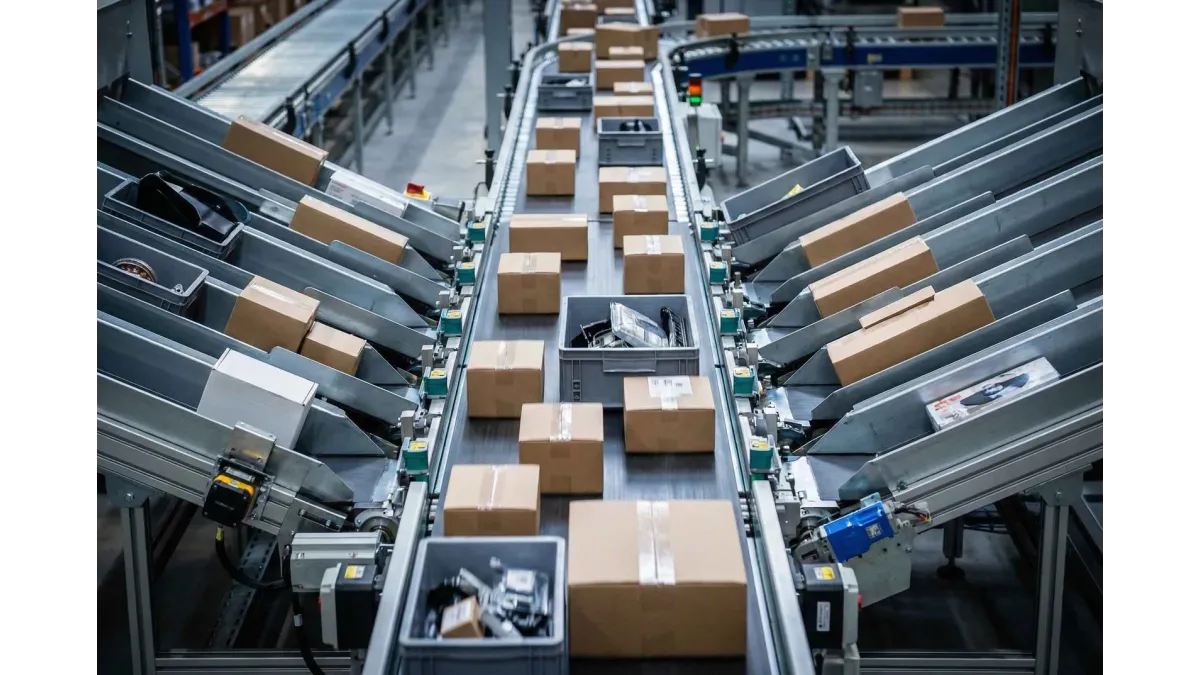
Automotive warehouses operate in conditions that are radically different from conventional distribution. They combine huge parts catalogues, short delivery times, a high cost of error and constant pressure on order processing speed. In this environment, warehouse automation is no longer optional – it becomes an infrastructure necessity that directly affects a company's ability to compete.
Automotive warehouses serve different types of customers at the same time: dealer networks, service stations, logistics hubs, online shops and insurance companies. Speed and accuracy matter differently to each of them, but they all expect consistent results without delays or errors. That is why solutions for automotive warehouses are designed differently from those for conventional e-commerce or FMCG distribution.
Freight flows in automotive logistics
The defining feature of automotive warehouses is the large number of small orders. Most shipments consist of one or two items that must be delivered as quickly as possible. This puts heavy pressure on internal logistics, because the product flow is fragmented rather than bulk.
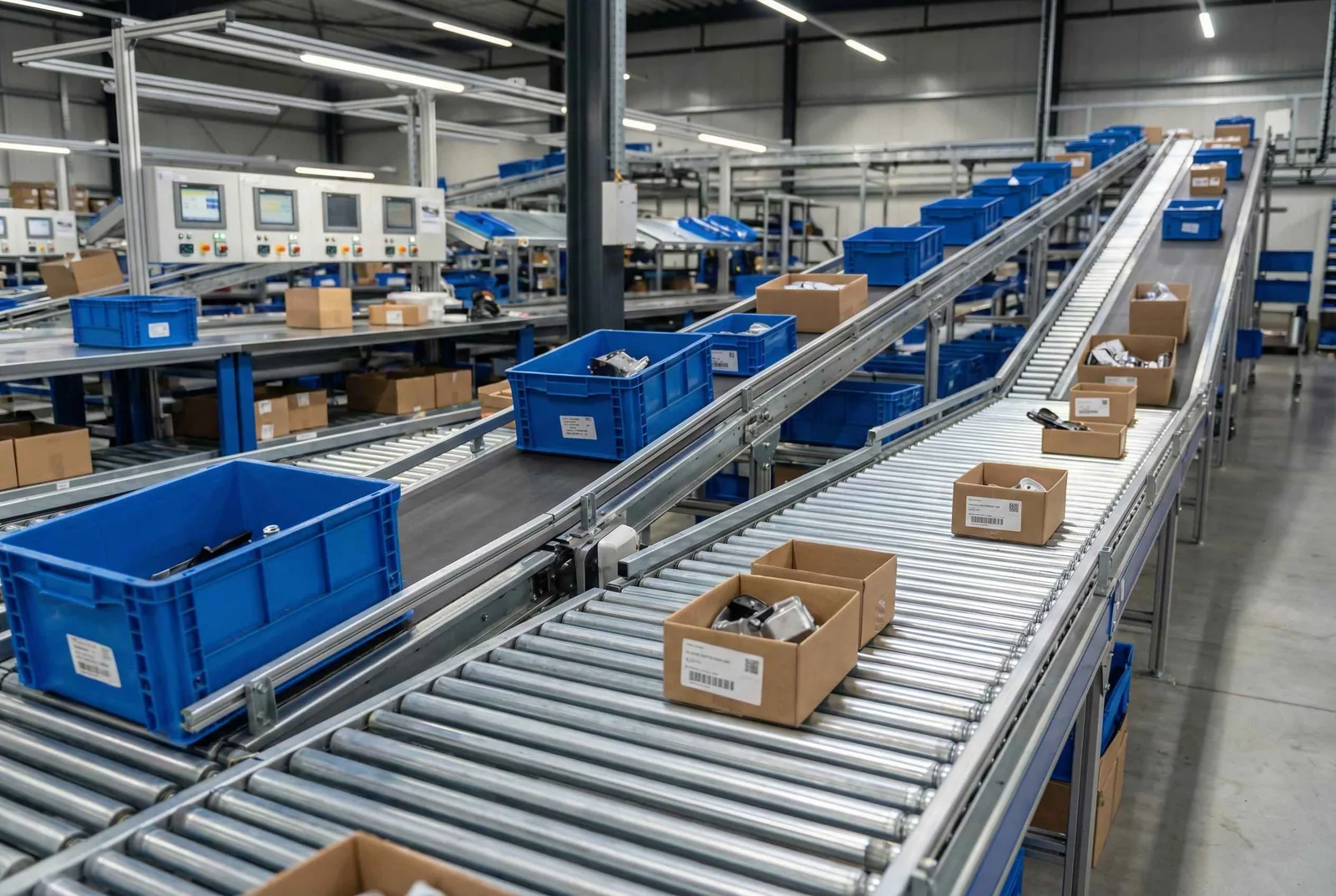
In this environment, manual handling quickly stops being efficient. This is where a powered roller conveyor comes in, providing controlled movement of cartons between the receiving, picking and packing zones without an operator. Staff no longer spend time on transport and can focus on picking orders.
 Equipment from this articleBelt ConveyorsView category
Speed and accuracy as priorities
An automotive warehouse cannot afford mistakes. A wrongly shipped part can halt a vehicle repair, cause downtime at a service station and lead to financial losses across the entire supply chain. That is why automation here is focused not only on speed but also on control.
As order volumes grow, sorters become a key element, automatically distributing packed shipments by delivery route or customer. This makes it possible to process thousands of shipments per shift without adding staff and without losing accuracy.
Picking as the critical warehouse zone
Most errors originate in the picking zone. Operators here handle a large number of items that often look alike but have different part numbers. Automated transport infrastructure reduces manual movements and allows the process to be standardised.
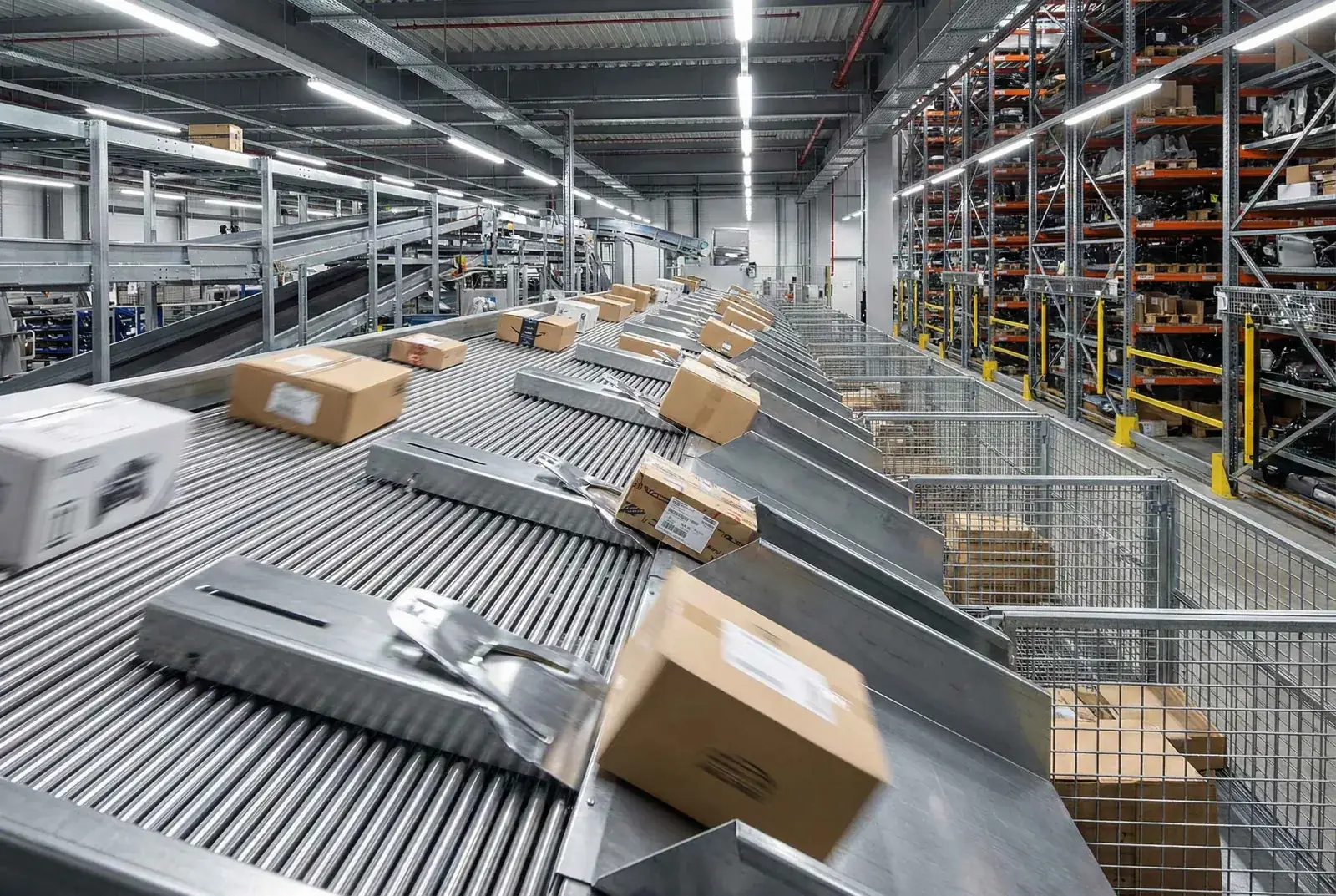
For this purpose, the warehouse uses a belt conveyor that creates a continuous flow between the picking, inspection and packing zones. Each carton follows a set route and arrives exactly where it needs to be processed, which significantly reduces the risk of human error.
Buffering and order accumulation
Automotive warehouses work in waves. Orders arrive unevenly, but shipments must leave on a strict schedule. For this, accumulation zones are created where packed shipments are held temporarily until the route is formed.
In these zones, a gravity roller conveyor works well: it accumulates cartons without consuming energy while keeping every shipment in order and accessible. This helps balance peak loads without overloading the dispatch area.
Vertical logistics in multi-level warehouses
Automotive warehouses are often built with mezzanines, because the number of SKUs grows faster than the available floor space. In these conditions, fast and safe movement of goods between levels becomes critical.
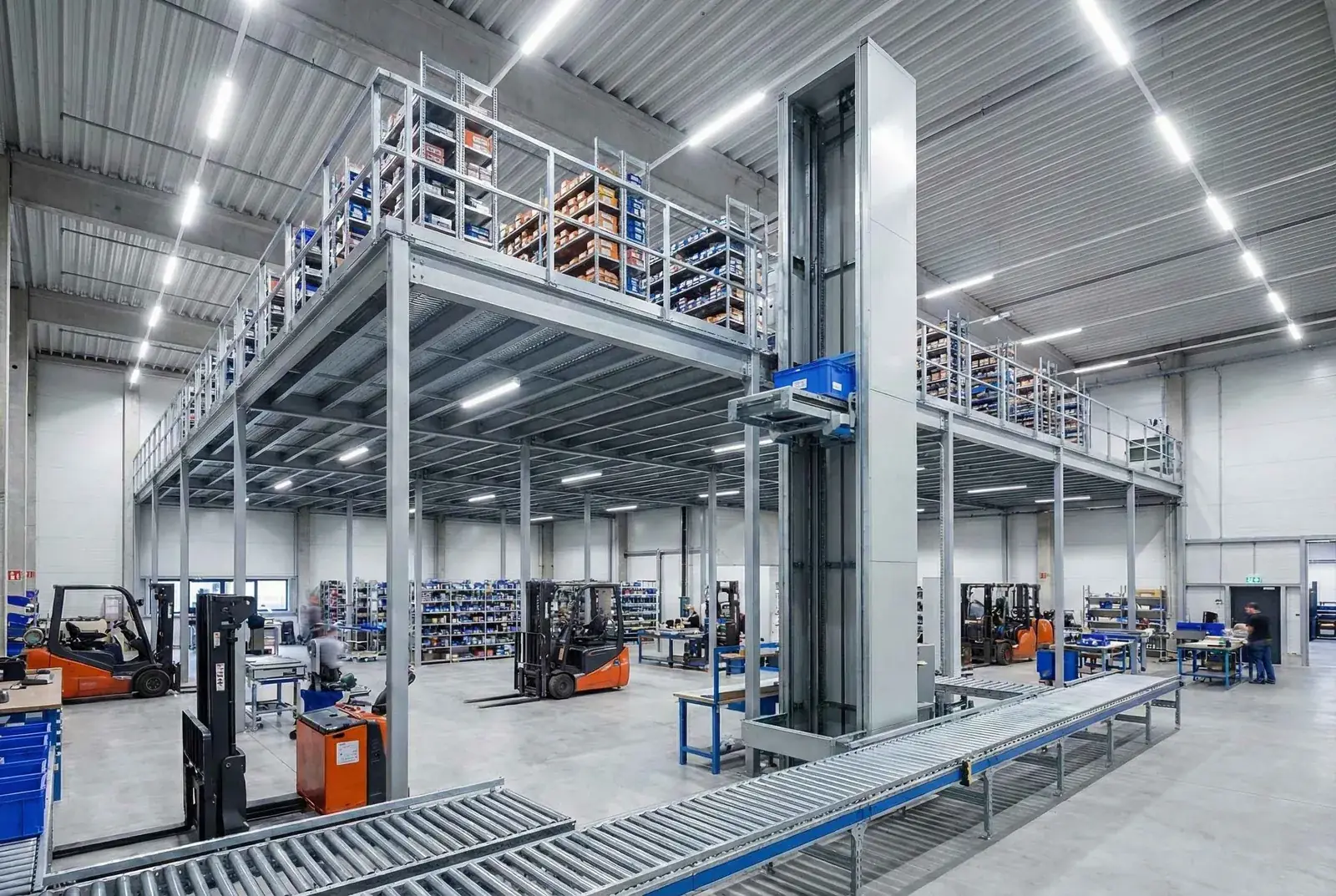
This is handled by warehouse lifts, which integrate into the warehouse's overall transport loop and transfer cartons or totes between floors without staff involvement. This reduces the physical strain on operators and keeps order processing speed stable even across many levels.
A system, not individual mechanisms
The main mistake in automating automotive warehouses is a fragmented approach. When a company introduces only individual elements without a single logic, the system becomes unstable. An efficient automotive warehouse is built as a single organism, where every conveyor, every lift and every picking zone is part of one flow.
This approach allows the warehouse to adapt to rising order volumes, changes in the SKU structure and new market requirements without a complete rebuild of the infrastructure.
Warehouse automation for the automotive industry has its own logic, shaped by the pressure of speed, accuracy and a vast product range. There is no room for one-size-fits-all solutions. Only a systematic approach to designing flows, transport and sorting creates a warehouse that runs steadily, scales and keeps errors to a minimum. This kind of infrastructure becomes the foundation of a competitive advantage in automotive logistics.
CategoryBelt ConveyorsTransporting boxes and individual items between warehouse zones.View category
 CategoryPowered Roller ConveyorsPowered transport of goods for processing lines.View category
 CategorySortersAutomatic sorting of goods by destination and order.View category
 CategoryGravity Roller ConveyorsGoods move under their own weight, with no electricity.View category
 CategoryWarehouse LiftsVertical transport of goods between floors and levels.View category
Show us your warehouse.
We’ll take a look, then show you how to improve it
Leave your contact details and briefly describe the task. A TOP Logistics Solutions specialist will contact you, clarify the details and propose the next step.