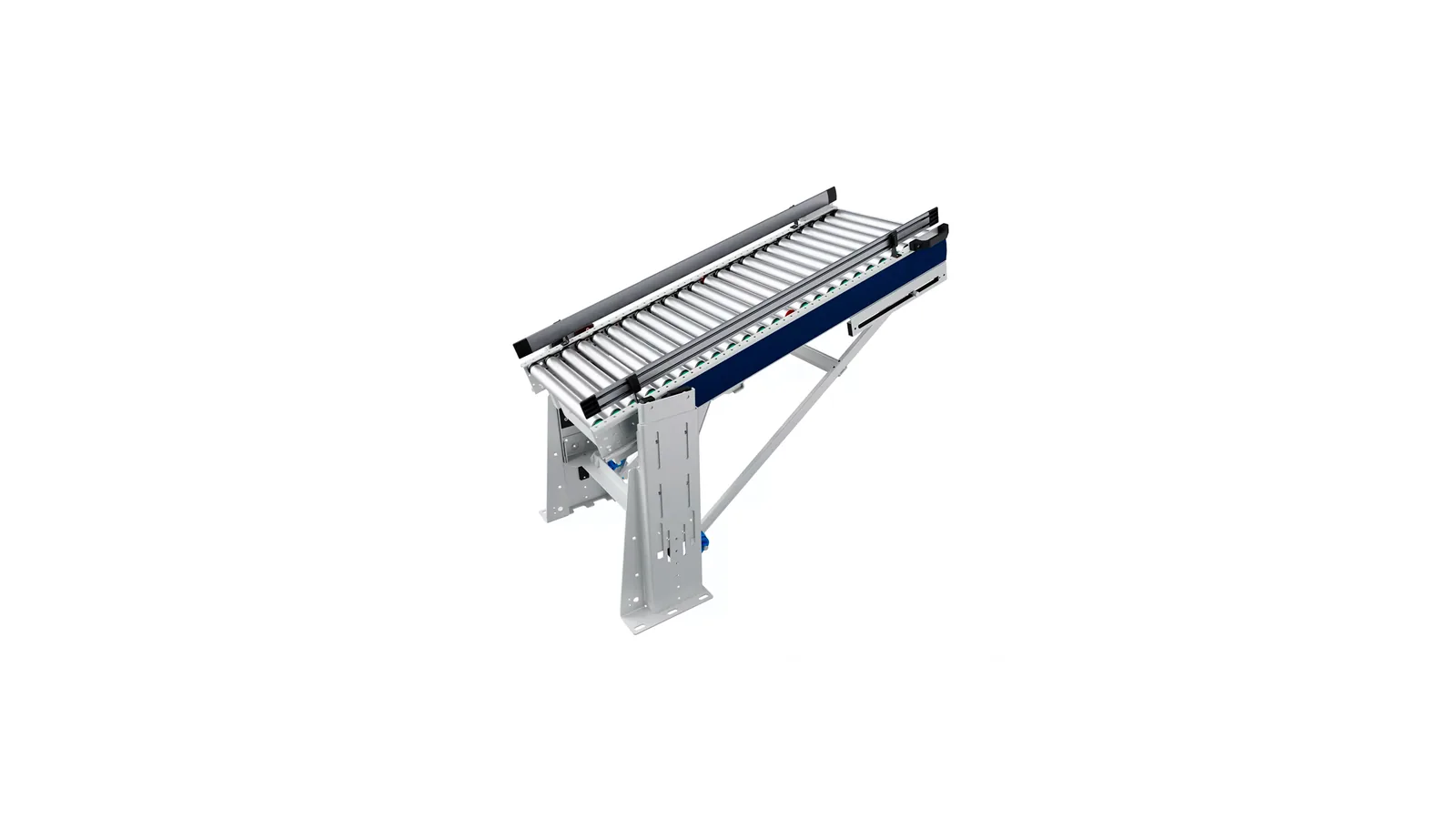
Powered roller lines with motorised rollers: zoned, aligning, curved and corner sections and lift gates – we design, install and commission them to suit your product flow.
What a powered roller conveyor is and how it works
A powered roller conveyor is a roller line driven by electric motors: motorised rollers are connected to the other rollers by poly-V belts. Unlike a gravity roller conveyor, it needs no incline and gives full control over movement: speed, stops, batch accumulation and changes of direction. Combined with gravity roller conveyors, belt conveyors, transfers, curve modules, sensors and controllers, it forms a fully automated intralogistics system.
How it works
Motorised rollerA motor turns the drive roller
TransmissionPoly-V belts pass the motion to the neighbouring rollers
ControlA controller and sensors set speed, stops and buffering
IntegrationThe line is linked with curves, transfers and sorting
Motion control
Speed, stopping at the right point, accumulation and reverse.
Batch accumulation
Zoned sections accumulate loads in complex lines.
Long distances
Moving goods between zones of one building or between workshops.
Even feeding
Gentle feeding of boxes to packing or weighing stations.
Powered roller conveyor modules
The line is assembled from modules to fit your route. They all work together and connect to gravity sections, transfers and pop-up units.
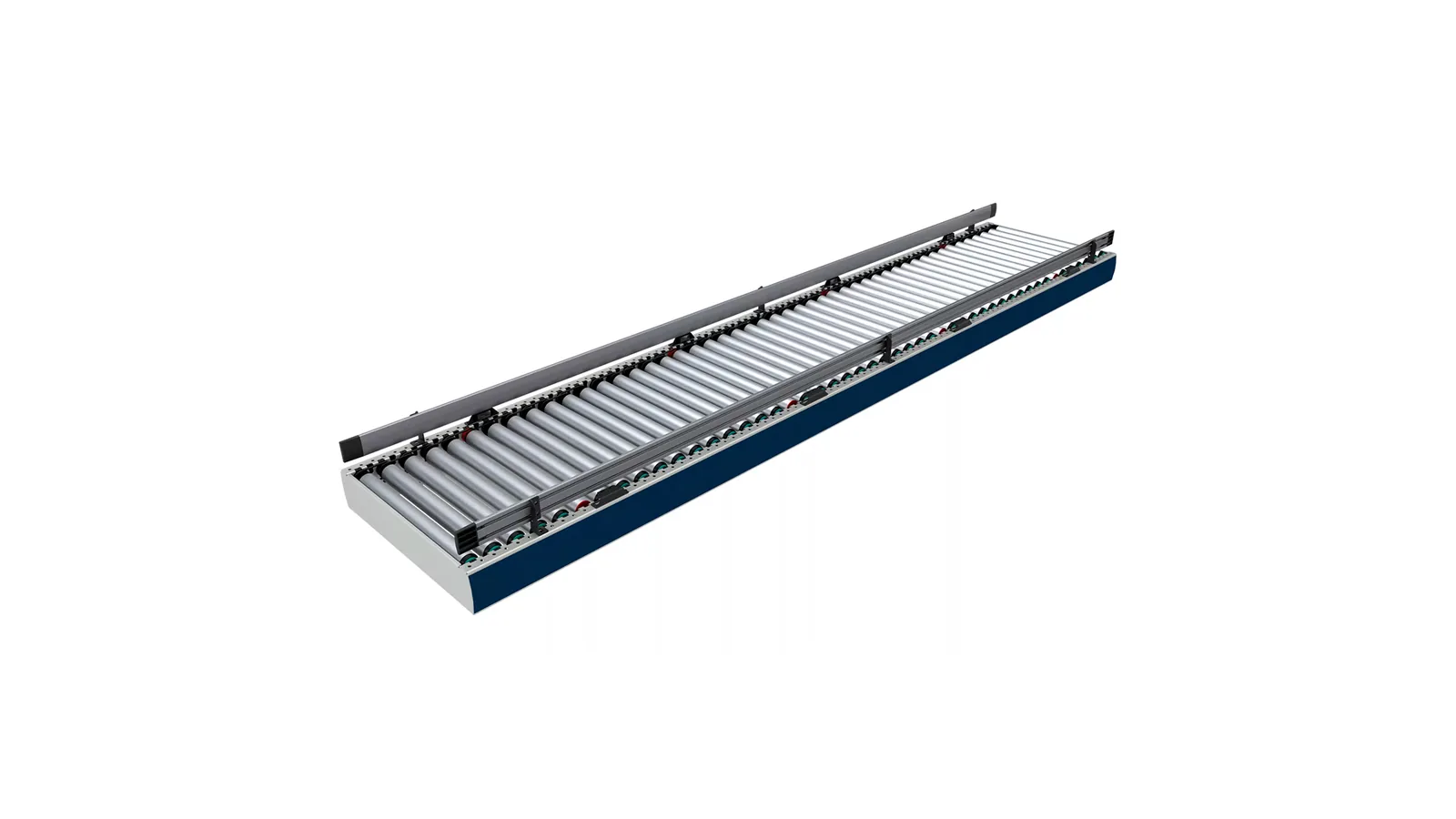
Zone roller conveyor
Accumulates items in complex conveyor lines. Each zone is programmed separately, with its own speed and function. Compatible with transfers, curve modules and pop-up units.
Components
Steel frame
Motorised rollers
Rollers
Panels
Controllers
Sensors
Side guides
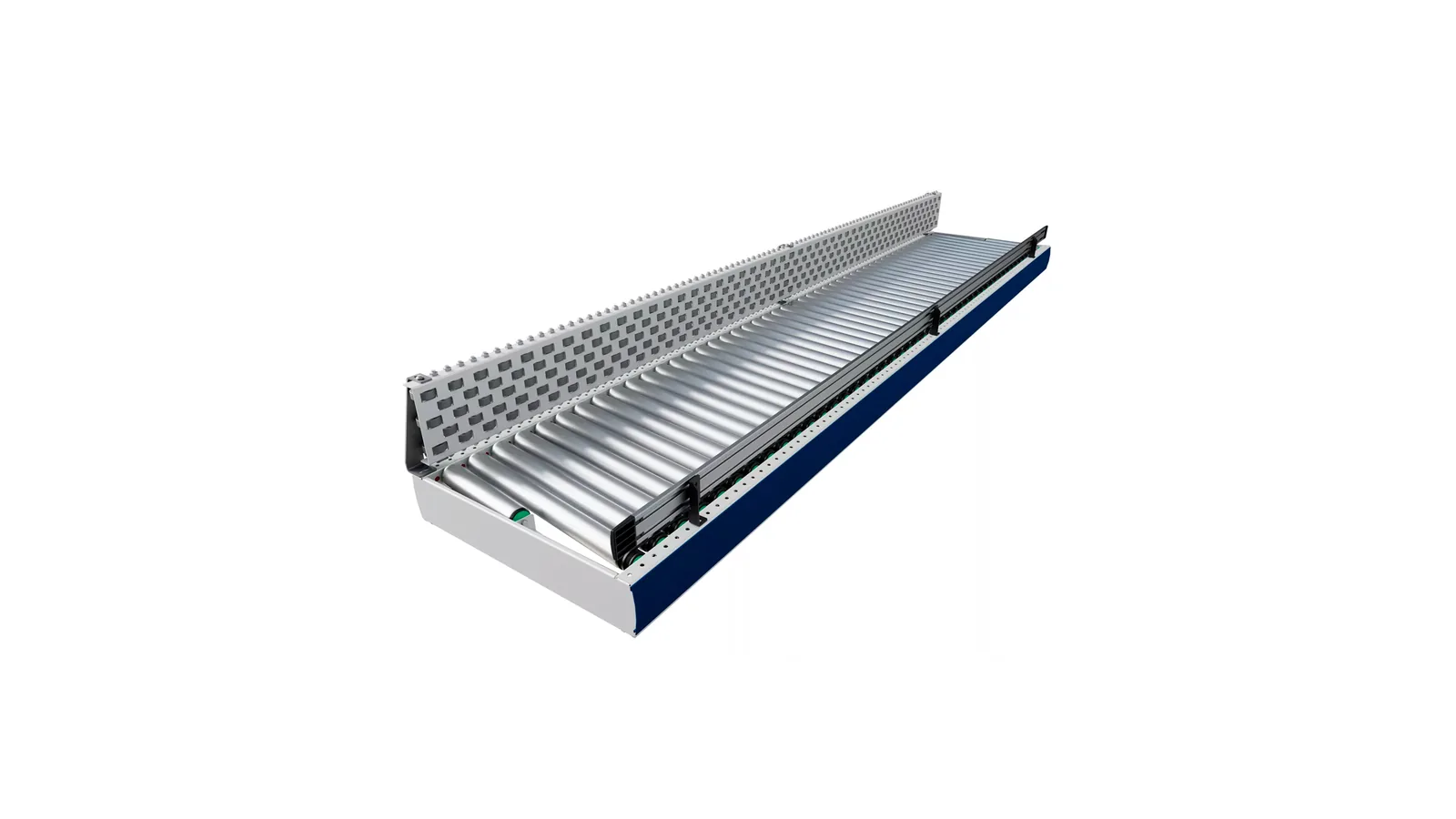
Aligning roller conveyor
Moves loads to the chosen side of the flow for an accurate change of direction. It is installed upstream of a node with specialised equipment.
Components
Steel frame
Motorised rollers
Rollers
Panels
Controllers
Sensors
Side guides
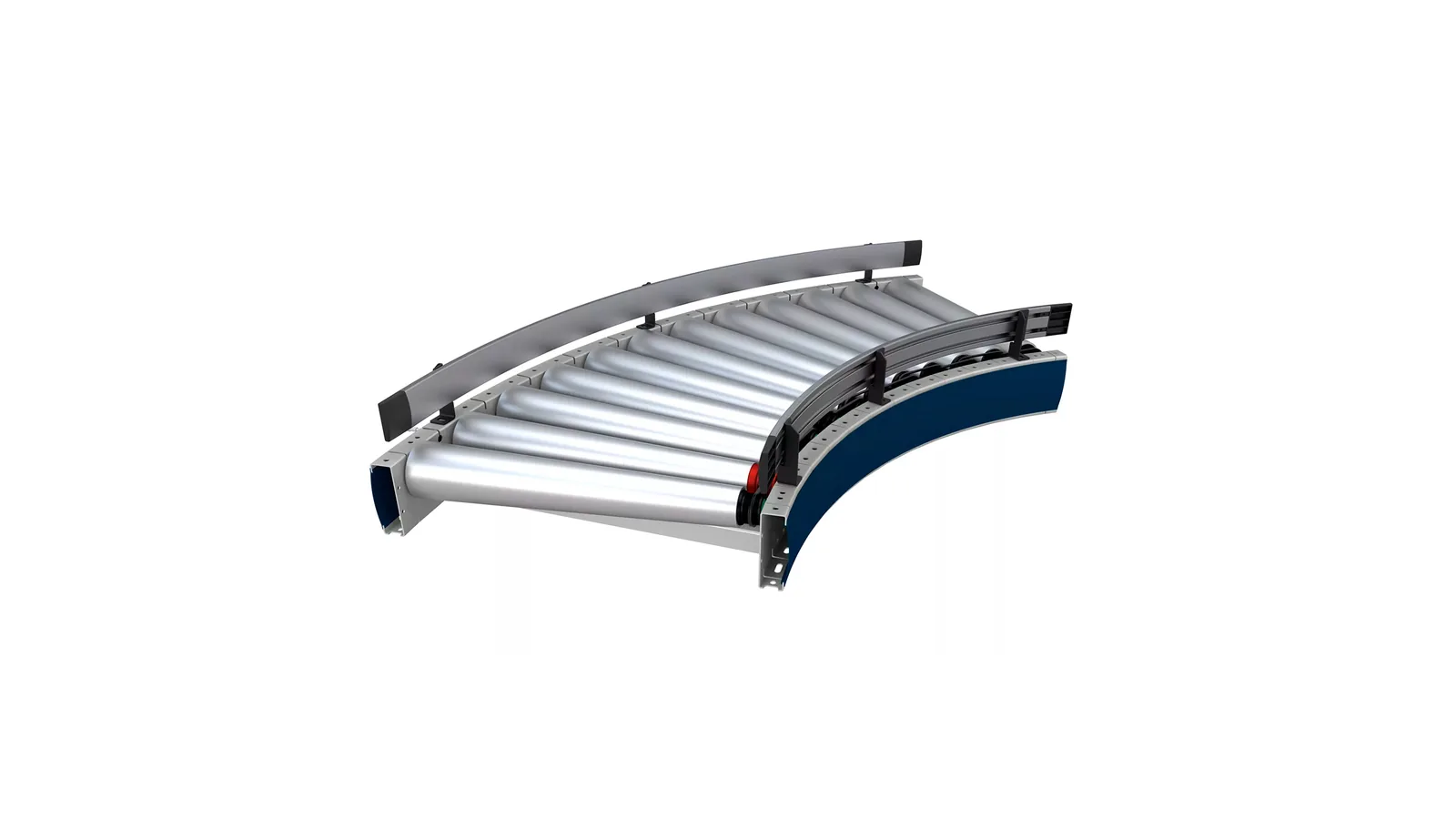
Powered curve roller conveyor
Changes the direction of travel. Tapered rollers keep the load equidistant from the side profiles, and the controller manages buffering. Frame angle: 30°, 45°, 60° or 90°.
Components
Frame 30–90°
Motorised roller
Tapered rollers
Belts
Controller
Sensors
Side guides
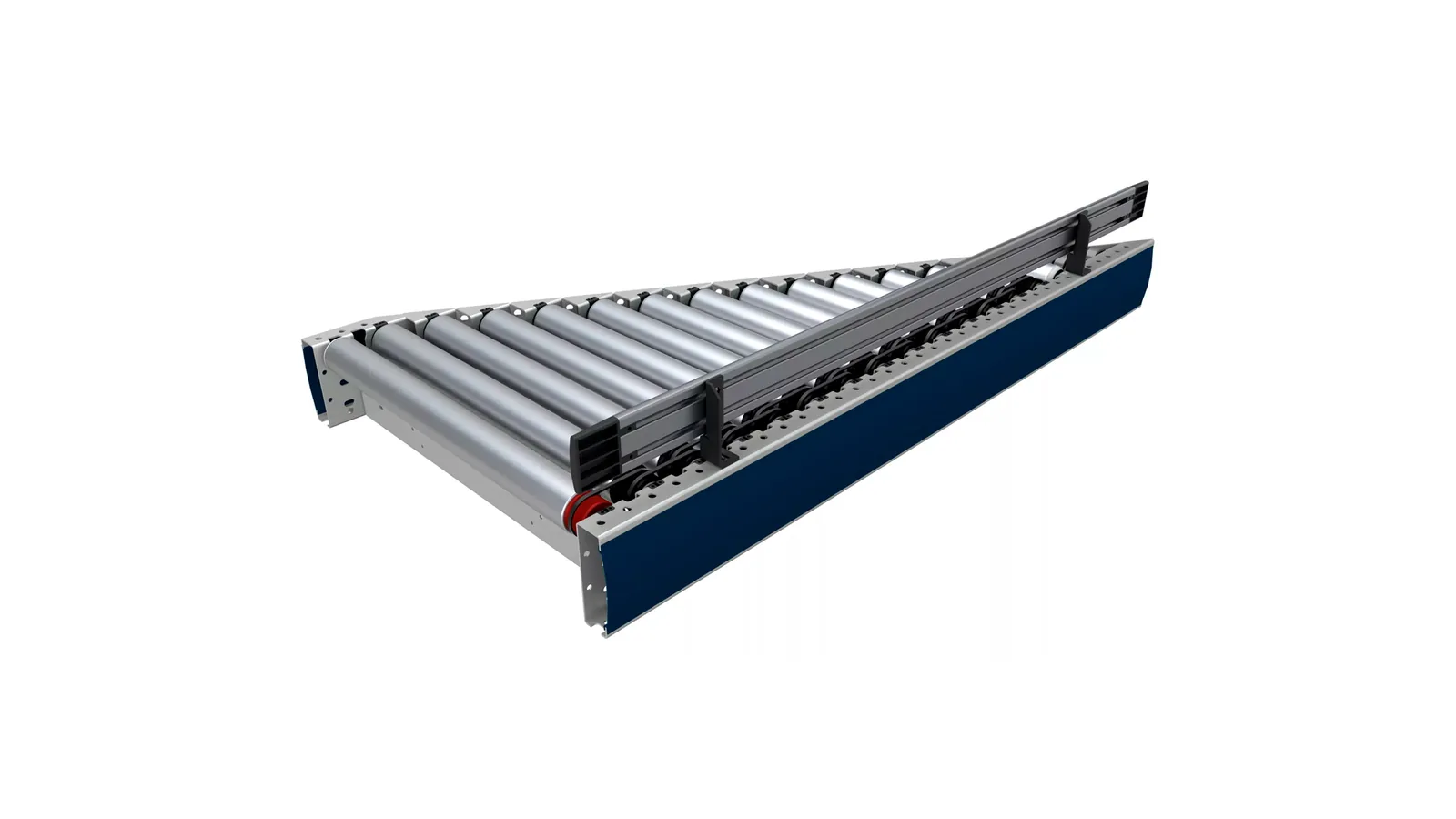
Powered angled roller conveyor
Merges loads onto the main line or diverts them to a secondary line, using gaps in the flow. Works together with a curve module or pop-up unit. Frame angle: 30° or 45°.
Components
Frame 30° or 45°
Motorised roller
Rollers
Belts
Controller
Sensors
Side guides
Powered lift gate
Lets people walk through the main line: when the gate is raised, the flow stops and resumes once it is lowered.
Components
Steel frame
Lifting system
Straight gravity rollers
Side guides
When to choose a powered roller conveyor
A good fit when
A high-intensity zone with a large flow of goods
Long distances inside a building or between workshops
Even feeding to packing or weighing is needed
Several areas have to be joined into one continuous network
Accumulation, stops and speed control are needed
Another solution is better when
A short transfer between two zones – a gravity roller conveyor or a short powered section is enough
There is no power supply or you need the simplest and cheapest option – a gravity roller conveyor
We start with a map of goods movement: we find the bottlenecks and select modules for the weight and size of your heaviest box, the building conditions and the required throughput. Then come design, installation, set-up and commissioning.
What is the key difference between powered and gravity roller conveyors?
Powered roller lines give full control over load movement: speed, stops, buffering and changes of direction are handled by the control system. Gravity roller conveyors, by contrast, are better suited to simple sections with an even flow, where goods move without an electric drive.
When should a roller conveyor be combined with belt conveyors?
In complex automated lines, roller conveyors often work together with belt conveyors. This combination suits transitions between zones with different load-handling logic and allows roller sections to be reliably integrated into the overall conveyor route.
How does a powered roller conveyor differ from a non-powered one?
A non-powered (gravity) roller conveyor works on an incline: the load rolls under its own weight, so the line does not depend on electricity and costs less, but boxes may speed up or stop halfway. A powered roller conveyor turns the rollers with a motor and gives full control: speed, stops, accumulation and reverse travel. More details in the article "Powered roller conveyor: when you need one, how to choose it and how it differs from a non-powered one".
How does a zone roller conveyor differ from a standard powered one?
Each zone of a zone roller conveyor is programmed separately, with its own speed and function. This lets the line accumulate loads in complex systems and work together with transfers, curve modules and pop-up units.
What should you consider when choosing a powered roller conveyor?
First, the maximum weight and size of the heaviest box: they determine the rollers, the motor power and the frame strength. Building conditions also matter: in damp or cold areas the metal must be protected against corrosion. And the best starting point is a map of goods movement – it shows the bottlenecks where the line will pay back fastest.