


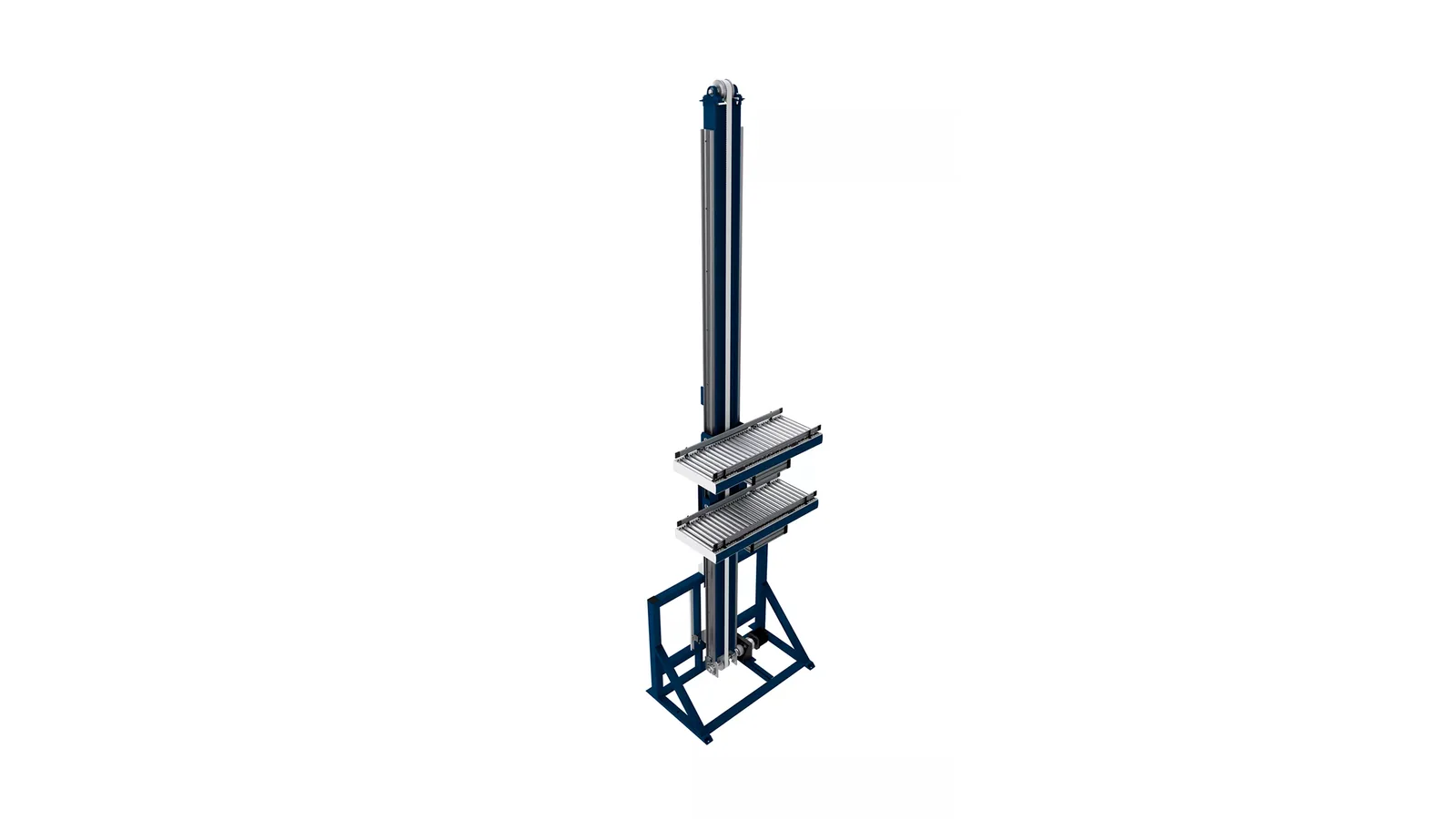
Vertical lift
An electrically driven lift that carries items between four levels. The carriages are fully configurable to the conveyor.
Components
- Frame
- Lift column
- Zoned conveyor carriages

 Request a call
 Warehouse RackingPallet, shelving, cantilever and drive-in racking, plus mezzanines
 Material Handling EquipmentForklifts, stackers, reach trucks and electric pallet trucks
 Warehouse AutomationConveyors, roller conveyors, sorters and warehouse lifts
 Plastic ContainersPlastic boxes and containers for storage and order picking
 Powered Roller Conveyors
 Gravity Roller Conveyors
 Belt Conveyors
 Warehouse Sorters
 Warehouse Lifts
 Conveyor Transfers
 Coming soonThis section will open shortlyRequest a call
Warehouse RackingPallet, shelving, cantilever and drive-in racking, plus mezzanines
Material Handling EquipmentForklifts, stackers, reach trucks and electric pallet trucks
Warehouse AutomationConveyors, roller conveyors, sorters and warehouse lifts
Plastic ContainersPlastic boxes and containers for storage and order picking
Powered Roller Conveyors
Gravity Roller Conveyors
Belt Conveyors
Warehouse Sorters
Warehouse Lifts
Conveyor Transfers
Coming soonThis section will open shortlyRequest a call
Vertical and spiral lifts for moving goods between warehouse levels – compact, productive and matched to your conveyor.

Warehouse lifts are goods lifts for warehouses built into the conveyor line: purpose-built structures that move goods vertically between several levels. They take up little floor space, deliver high throughput and link up with conveyors and roller conveyors into a single vertical-and-horizontal flow of goods. We supply electrically driven vertical lifts and spiral lifts for multi-level warehouses.
A compact mast instead of long inclined sections.
Continuous transfer of goods between levels.
Carriages are fully configurable to the line.
Mezzanines and sites where floor space is expensive.
We design every lift individually – for your loads, your line and the installation site.
An electrically driven lift that carries items between four levels. The carriages are fully configurable to the conveyor.
Components
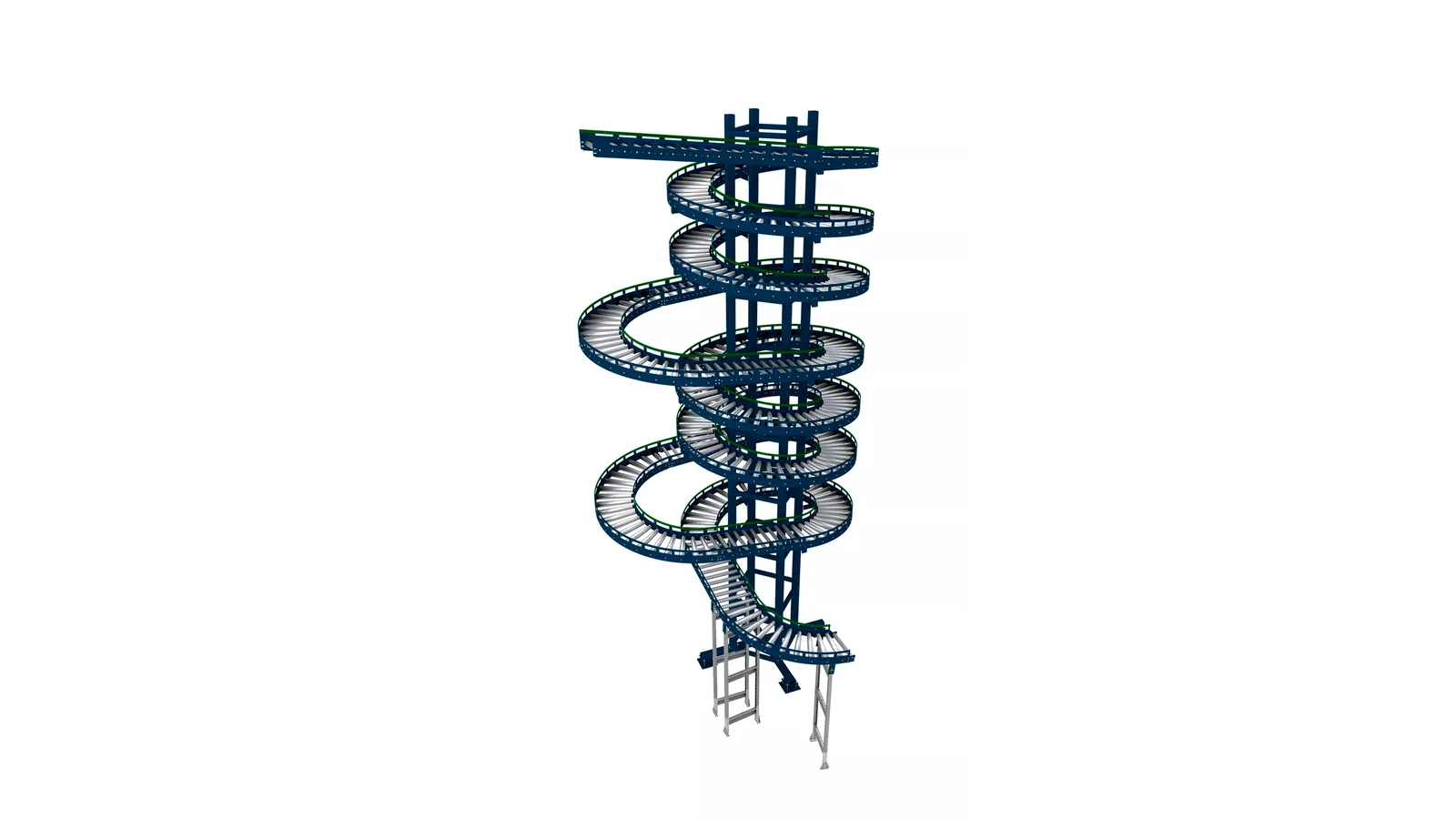
A robust gravity conveyor spiral mounted on a load-bearing column. Its dimensions depend on the loads and the installation site.
Components
A good fit when
Another solution is better when
Compare all solutions by flow, distance and number of directions in the table “How to choose your level of automation”.
We will select the lift type, number of levels and carriages for your loads, and connect the lift to conveyors and transfers on every level.
Get a lift quote Racking
Mezzanines
The level served by the lift
 Automation
Belt Conveyors
Feeding goods to the lift
 Automation
Powered Roller Conveyors
Taking goods away from the lift
A transparent process, with no juggling between separate suppliers and installers. You know what is happening at every step.
Start with a consultationWe clarify your needs, advise and make a preliminary equipment selection.
We measure and fully assess the warehouse: geometry, floor, aisles, work zones.
We produce drawings, a layout plan and a specification.
We select handling equipment and other equipment to suit the racking system.
We agree delivery and payment terms and sign the contract.
We manufacture racking systems and automation equipment.
We deliver structures and equipment to your site anywhere in Ukraine.
We install the racking, set up and commission automation, and hand over a ready-to-run warehouse.
A few short questions – an engineer will prepare a preliminary solution and an indicative cost for your warehouse.


Lifts usually work in combination with horizontal flows, receiving and handing over goods through direction-change units. This keeps processes continuous and links vertical and horizontal movement logically into a single system.
A vertical lift carries items between four levels. A spiral lift is selected according to the size of the loads and the installation site. We design every lift individually to the customer’s requirements.
A vertical lift is electrically driven: zoned conveyor carriages move the load along the lift column. A spiral lift is a gravity conveyor spiral on a load-bearing column, and the load travels down it under its own weight.
Leave your details – an engineer will call you back and work out the cost.
Request received. Our specialist will contact you shortly.