Belt conveyors transport items of various shapes and sizes. The load rests on the belt with its entire base, so they handle even small items, polyethylene packaging and soft-bottomed goods. They run very quietly and smoothly, with minimal vibration, and deliver high torque right from start-up.
Quiet operation
Very low noise and minimal vibration.
Any base
Small items, polyethylene packaging, soft packages.
High throughput
Smooth movement and high torque from start-up.
Between levels
An incline conveyor handles rises smoothly.
Types of belt conveyors
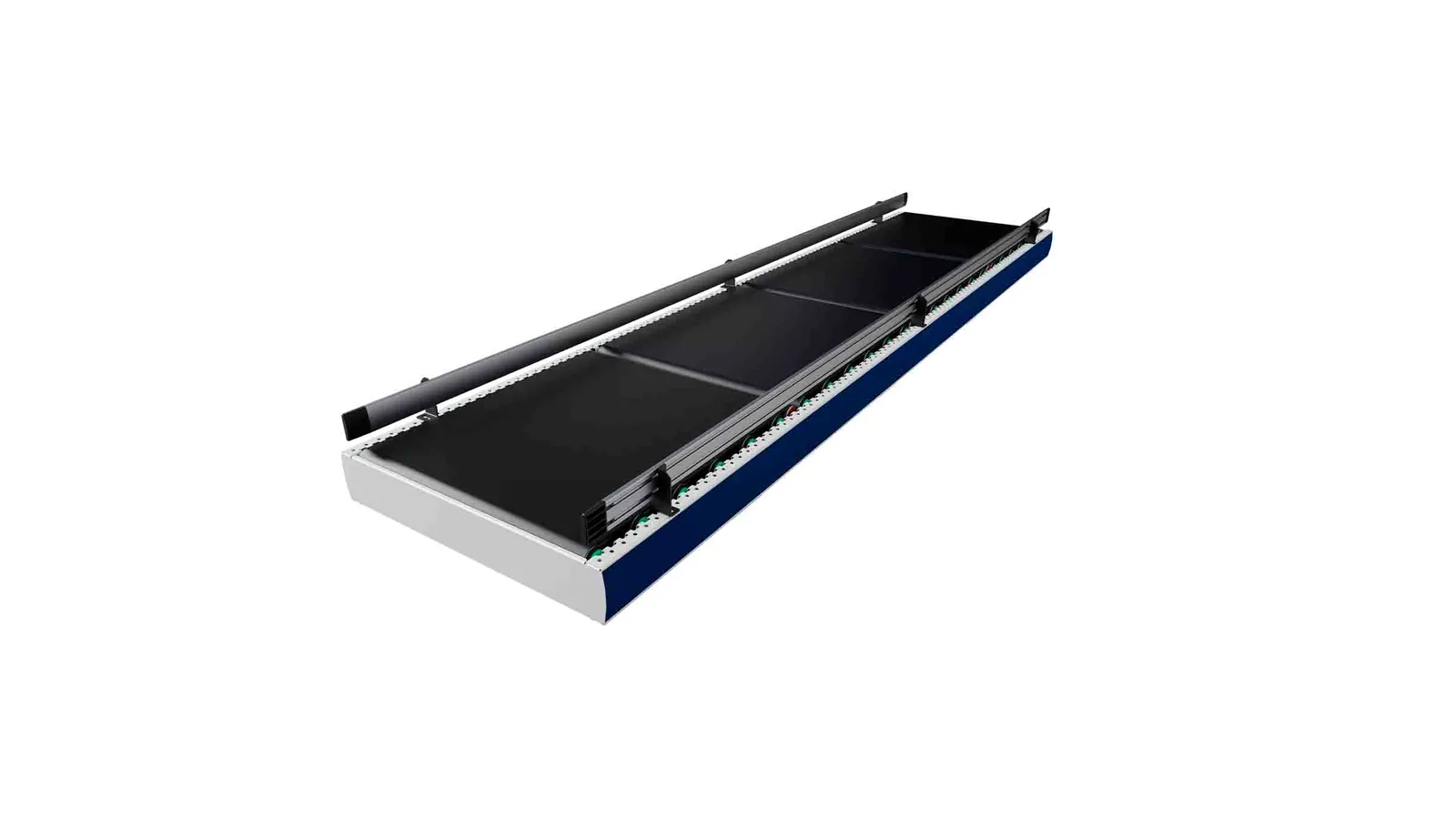
Zone belt conveyor
Combines a belt conveyor and a zone roller conveyor. The load rests on the belt with its entire base, so the conveyor accumulates goods of various shapes and sizes; each zone has its own motorised roller and its own speed.
Components
Steel frame
Motorised rollers
Rollers
Conveyor belt
Tensioning and support rollers
Controllers
Sensors
Side guides
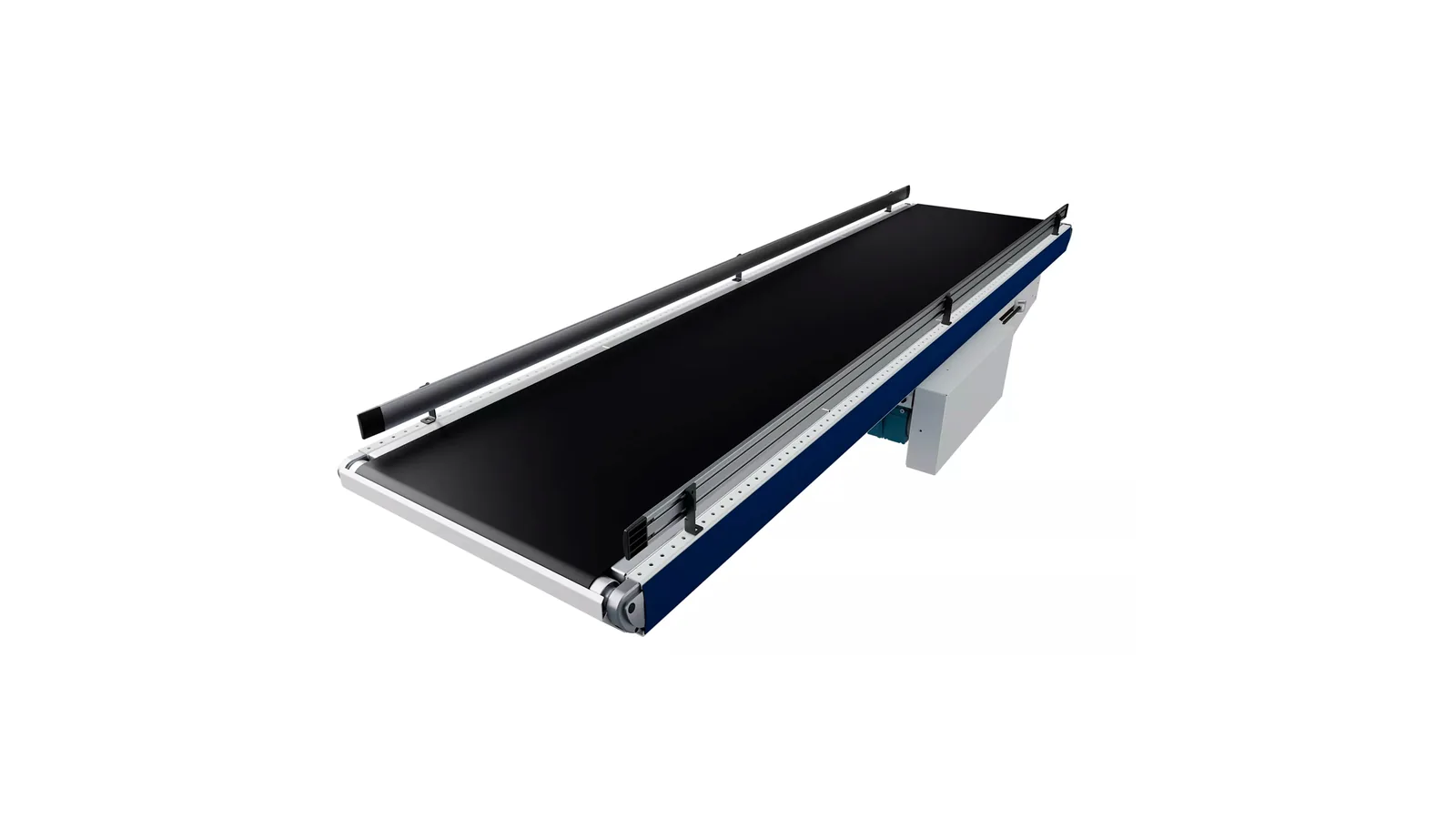
Belt conveyor
A high-throughput unit: the belt supports the entire base of the item. Ideal for small items, polyethylene packaging and soft-bottomed goods.
Components
Drive unit
Steel frame
Conveyor belt
Tensioning and support rollers
Side guides
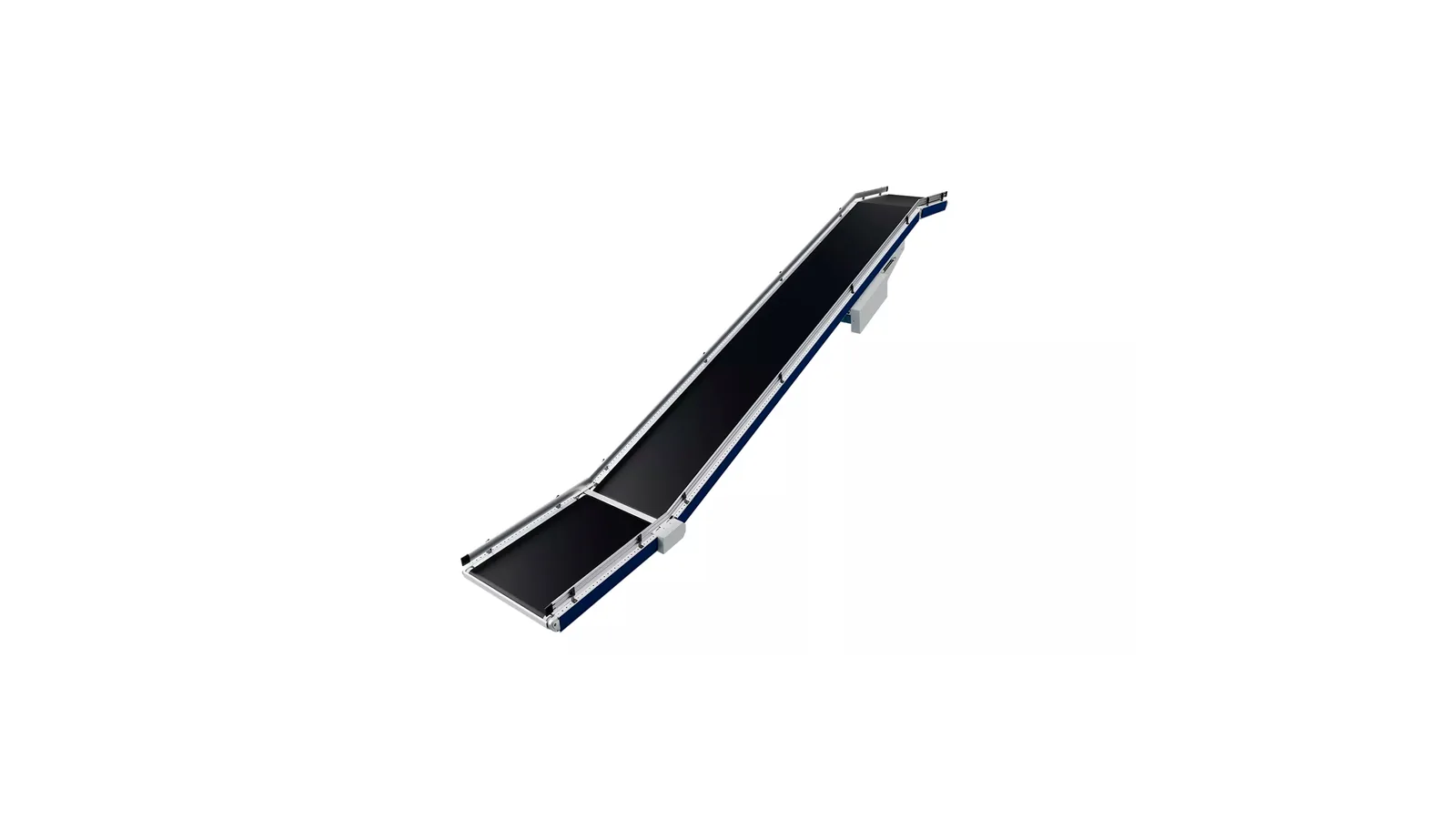
Level-to-level belt conveyor
Moves items between levels. Coordinated operation of the upper and lower transition sections lets the load handle rises smoothly.
Components
Drive unit
Steel frame
Conveyor belt
Tensioning and support rollers
Side guides
When to choose a belt conveyor
A good fit when
Continuous flow between several zones
Small, soft or unstable loads, bags
Quiet and smooth operation matters
Goods have to be transferred between levels on an incline
When are belt conveyors more effective than roller systems?
Belt lines are better for moving small, unstable or soft loads that need continuous support across their whole base. In accumulation or controlled-flow zones they are often combined with powered roller sections for more precise motion control.
How are belt conveyors integrated into complex conveyor routes?
In large warehouse systems, belt conveyors usually work as part of a branched logistics layout that uses various conveyor transfers and merges to change direction or level, or to split the flow between processing zones.
How does a zone belt conveyor differ from a standard one?
In a zone conveyor, each zone is driven by its own motorised roller and has its own speed, so the conveyor can accumulate goods of various shapes and sizes. A standard belt conveyor has a single drive unit and moves the load continuously.
Can a belt conveyor move goods between floors?
Yes, that is what the level-to-level belt conveyor is for: coordinated operation of the upper and lower transition sections lets the load handle rises smoothly. For vertical lifting over several levels, warehouse lifts are used.