


Warehouse Automation in 2026: Solutions, Conveyors, Roller Conveyors and Sorters
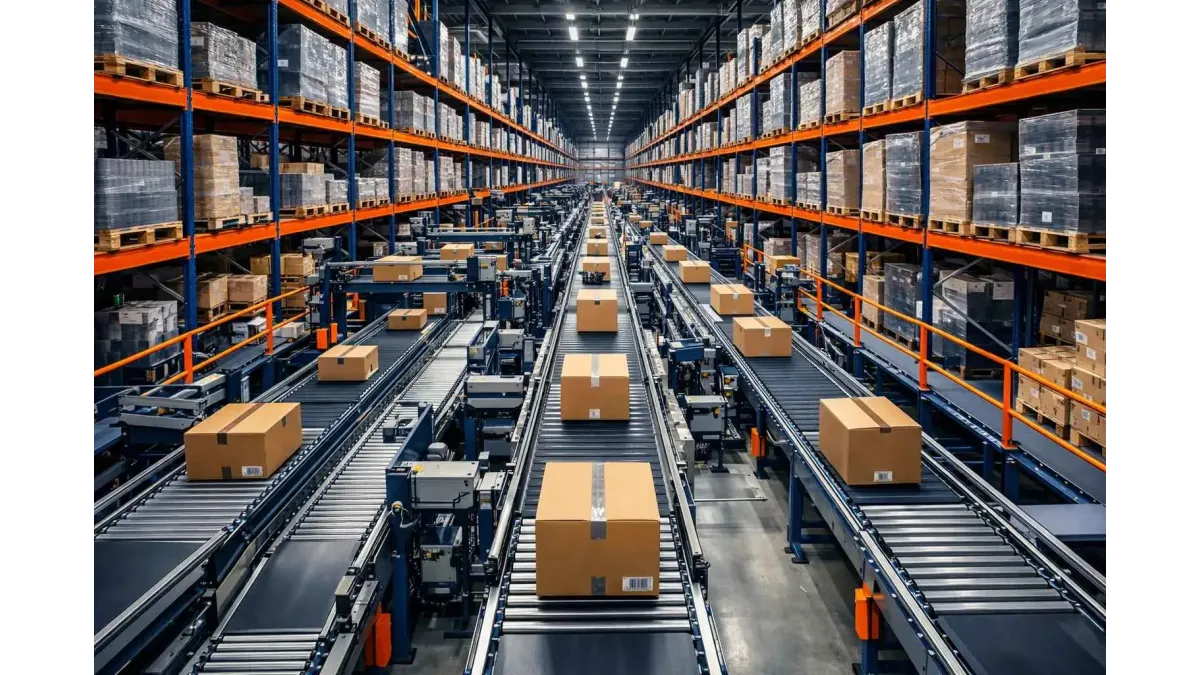
In 2026, warehouse automation is no longer a competitive advantage – it is the standard. E‑commerce, manufacturing and distribution businesses are under constant pressure: customers expect fast delivery, logistics must run without disruption, and staff shortages are pushing companies towards technology.
Today a warehouse is more than a storage space. It is a system in which every stage is interconnected: goods receiving, putaway, movement between zones, sorting and dispatch. Automation makes these processes predictable, controllable and scalable.
Warehouse automation in 2026: key tasks and approaches
Automation solves several business problems at once: it speeds up order processing, reduces errors, optimises the use of floor space and lowers staff costs.
It is important to distinguish between partial and full automation. Partial automation covers individual processes, such as transport or sorting. Full automation integrates every stage of warehouse operations into a single system. Success depends on the right flow logic, not just on the equipment. That is why warehouse automation starts with an analysis of product flows, and only then moves on to choosing the technical solutions.
 Equipment from this articleBelt ConveyorsView category
Conveyor systems as the backbone of internal warehouse logistics
Conveyors are the “arteries” of a warehouse, keeping loads moving continuously between zones. They reduce manual labour and speed up processes.
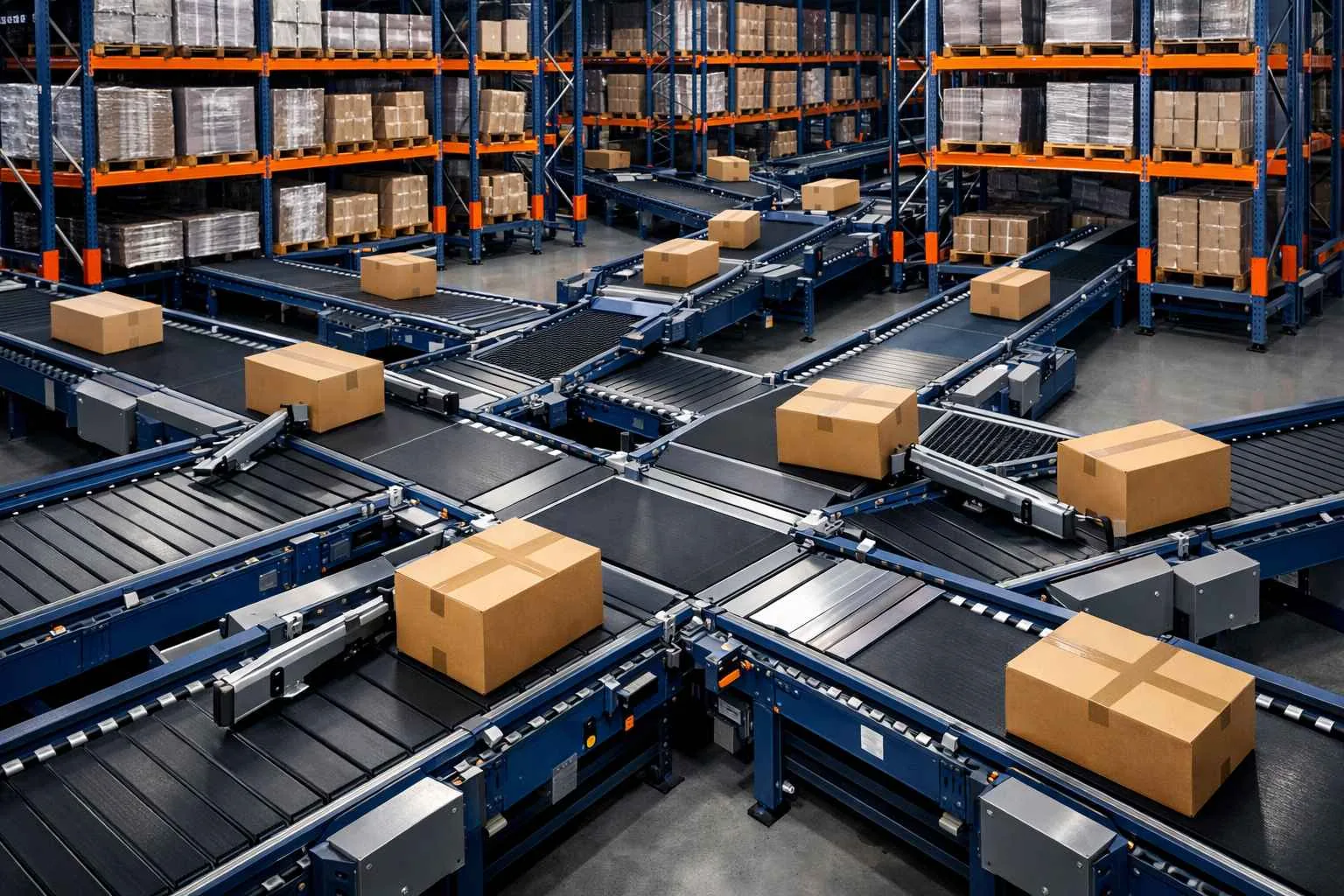
The most widely used option is the belt conveyor, which is suitable for moving cartons, packages and other standard loads. Complex systems use conveyor transfers and merges to redirect product flows to different warehouse zones. This is especially important for large logistics centres where several picking and dispatch lines run at the same time.
Roller conveyors in warehouse processes: when to use them and which type to choose
Roller conveyors are simple and effective solutions for moving loads. There are two types: the powered roller conveyor and the gravity roller conveyor.
A powered roller conveyor is driven by a motor and moves loads in a controlled way. It suits high-intensity zones. A gravity roller conveyor relies on an inclined surface: loads move under their own weight. It is a simple, low-cost solution for warehouses with moderate throughput.
Problems arise when companies choose the wrong type of roller conveyor. For example, using a gravity conveyor in a high-volume zone leads to jams and disruptions.
Sorters and order picking automation
Sorters automate the distribution of goods by destination. This is especially important in B2B logistics, where speed and accuracy are decisive.
Sorters reduce the impact of the human factor, cut the number of errors and speed up dispatch. A typical product flow looks like this: receiving – storage – sorting – dispatch.
Vertical logistics: warehouse lifts and multi-level storage
When floor space is limited, companies start building upwards. In such cases, warehouse lifts become indispensable. They move loads quickly between levels and make multi-level storage systems possible.
Lifts integrate with belt and roller conveyors, creating a single vertical and horizontal flow logic for goods. This solution is particularly relevant for urban warehouses, where space is expensive and every square metre counts.
How to match automation to real warehouse conditions
The choice of equipment depends on several factors:
- type of goods and their turnover;
- floor area and height of the warehouse;
- peak loads;
- the ability to scale without a complete rebuild.
Automation must be adapted to real conditions. There is no one-size-fits-all solution: what works in one warehouse may be ineffective in another.
An integrated approach to warehouse process automation
Effective automation involves several stages: analysis of logistics flows, equipment selection, integration of solutions, installation and technical support. This is the approach that allows companies such as TOP LS to build systems that work in the long term and meet business needs.
Common mistakes in warehouse automation
Most problems occur when automation is introduced without a strategy. Fragmented solutions that cover only individual processes do not deliver the expected results. Ignoring future business growth means the system quickly becomes outdated.
Another mistake is cutting costs on design. Without a proper flow analysis, even the most expensive equipment will not work efficiently.
Warehouse automation as a long-term investment
Automation is not a cost but an investment in the future of the business. It provides process control, predictable logistics and a return on investment. An automated warehouse is ready for growth and can scale without chaos or unnecessary expense.
Frequently asked questions
Where should warehouse automation start in 2026?
Start by analysing logistics flows and identifying the weak points in warehouse operations.
Can a warehouse be automated in stages?
Yes, many companies start with individual zones – transport or sorting – and gradually integrate other solutions.
What equipment is essential for an automated warehouse?
The foundation is conveyor systems, roller conveyors and sorters, which form the backbone of internal logistics.
When does automation fail to deliver the expected results?
When it is introduced without a strategy, without allowing for future growth and without proper design.
CategoryBelt ConveyorsTransporting boxes and individual items between warehouse zones.View category
 CategoryConveyor TransfersCurves, merges and diverts for conveyor lines.View category
 CategoryPowered Roller ConveyorsPowered transport of goods for processing lines.View category
 CategoryGravity Roller ConveyorsGoods move under their own weight, with no electricity.View category
 CategorySortersAutomatic sorting of goods by destination and order.View category
 CategoryWarehouse LiftsVertical transport of goods between floors and levels.View category
Show us your warehouse.
We’ll take a look, then show you how to improve it
Leave your contact details and briefly describe the task. A TOP Logistics Solutions specialist will contact you, clarify the details and propose the next step.