1. Home
  2. Warehouse Racking
  3. Drive-in Racking

Drive-in Racking

Drive-in and drive-through (deep-lane) racking for uniform goods: up to 80% of warehouse volume used for storage, from 1,800 UAH per linear metre – design and installation anywhere in Ukraine.

  • up to 12,185 mmstructure height
  • up to 2000 kgper pallet position
  • 1350–1450 mmlane width
  • up to 80%of usable warehouse volume

What is drive-in (deep-lane) racking

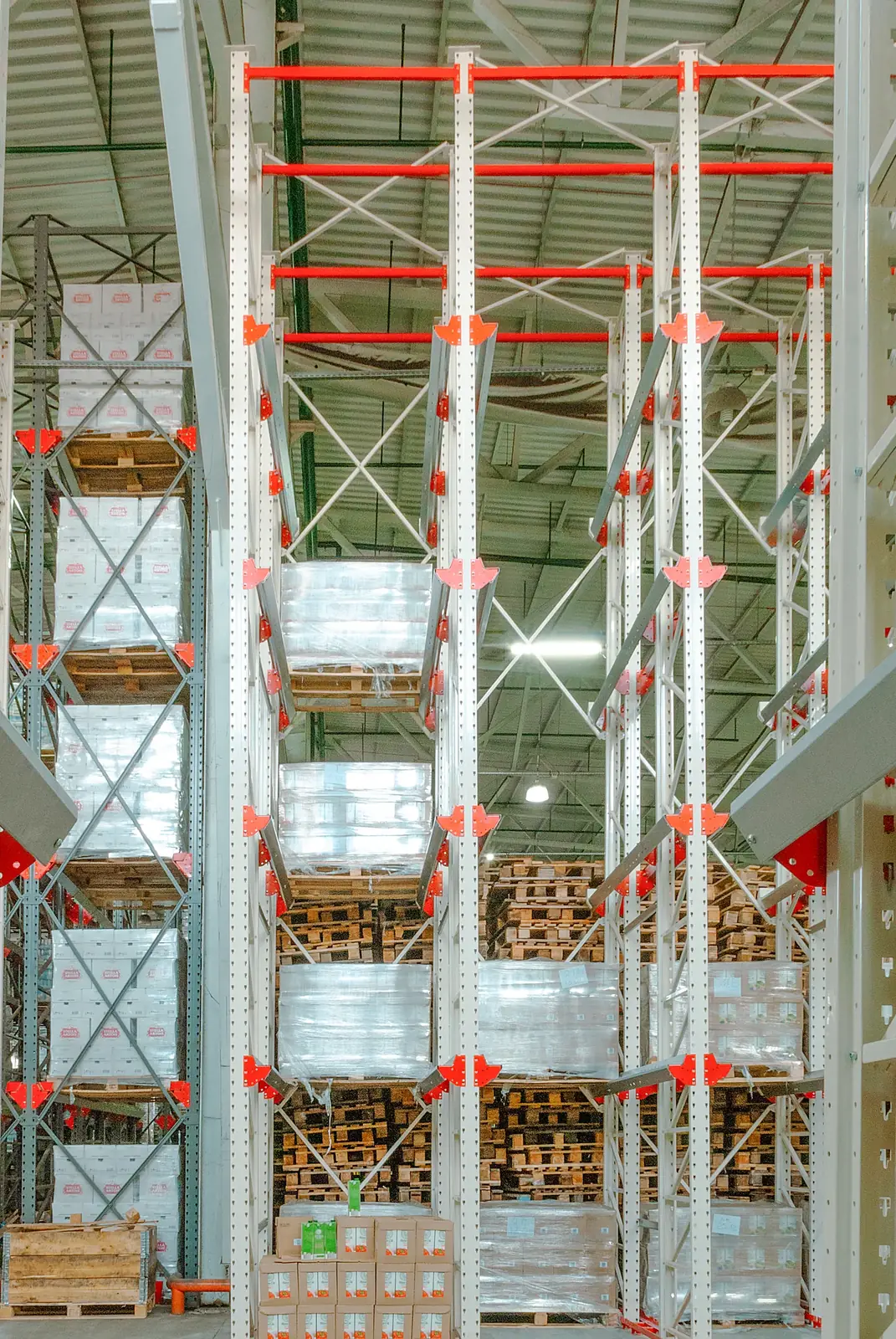
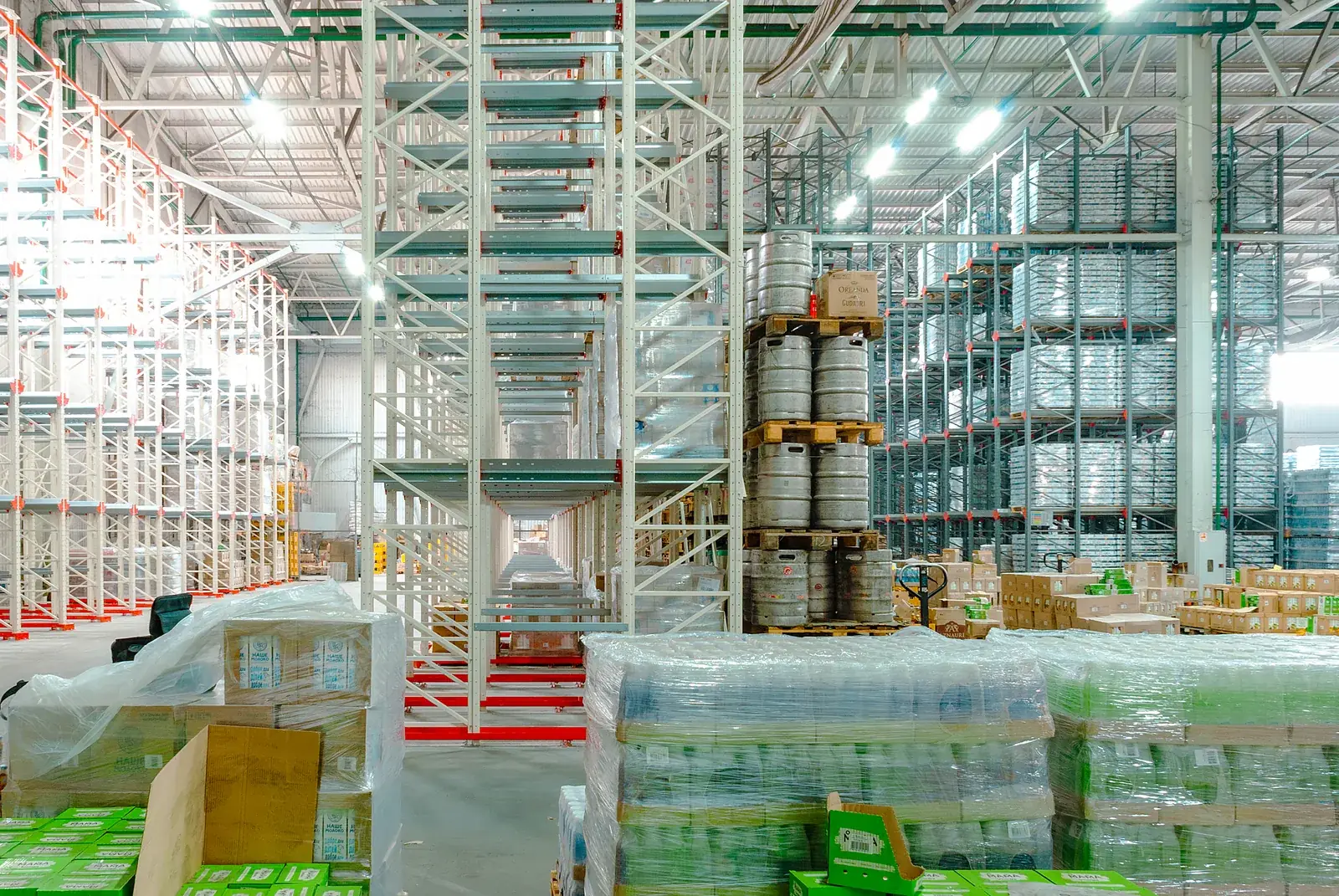
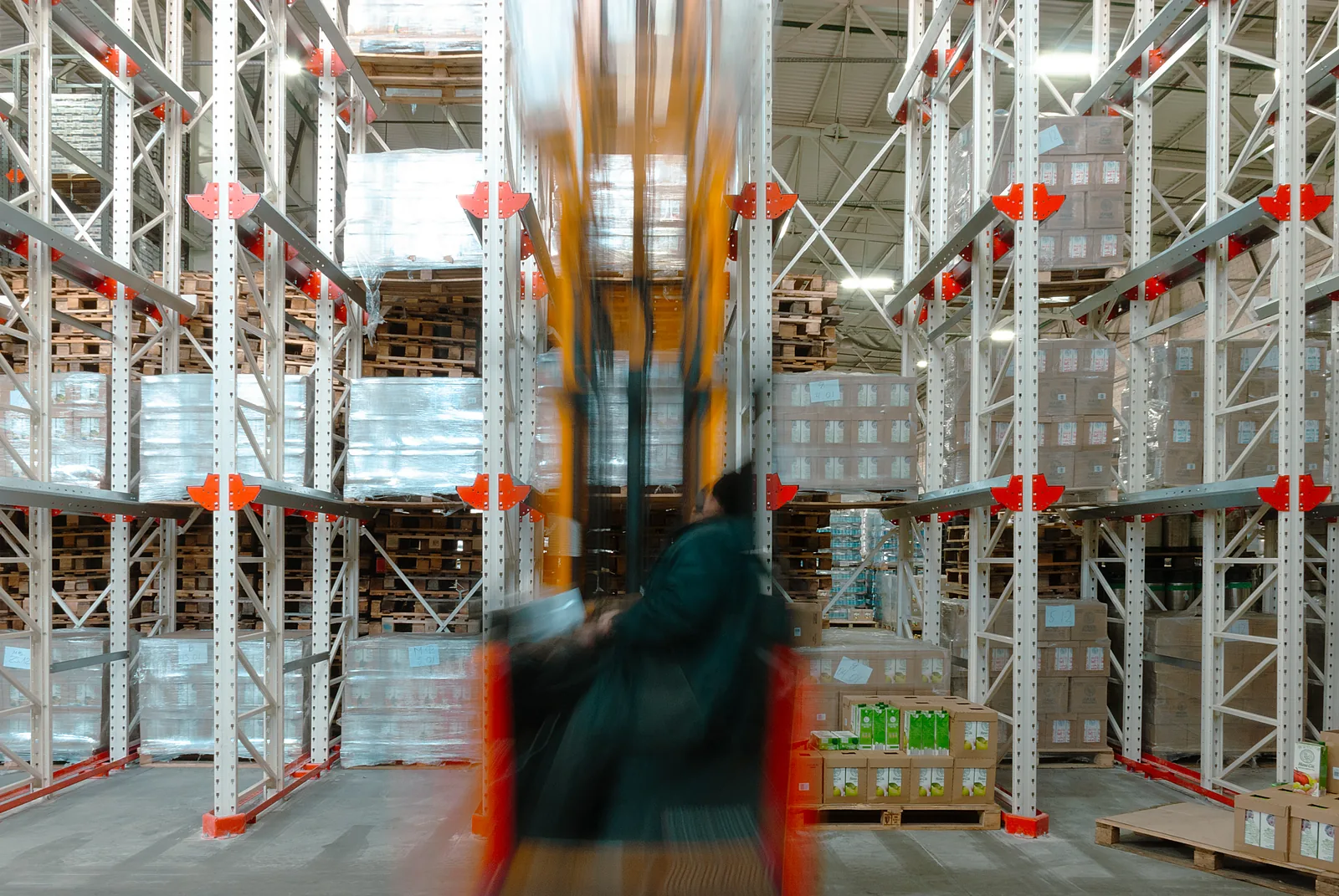
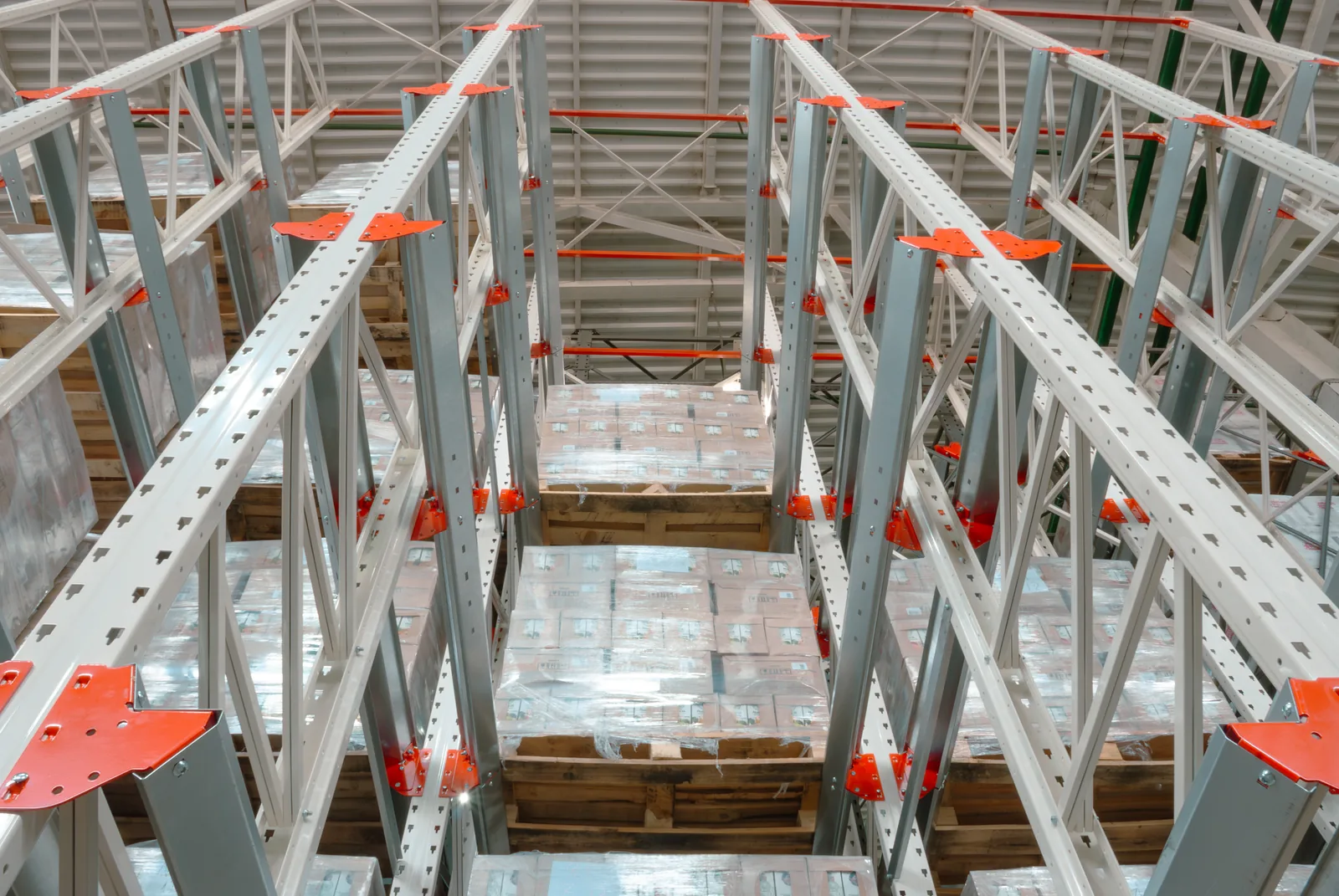
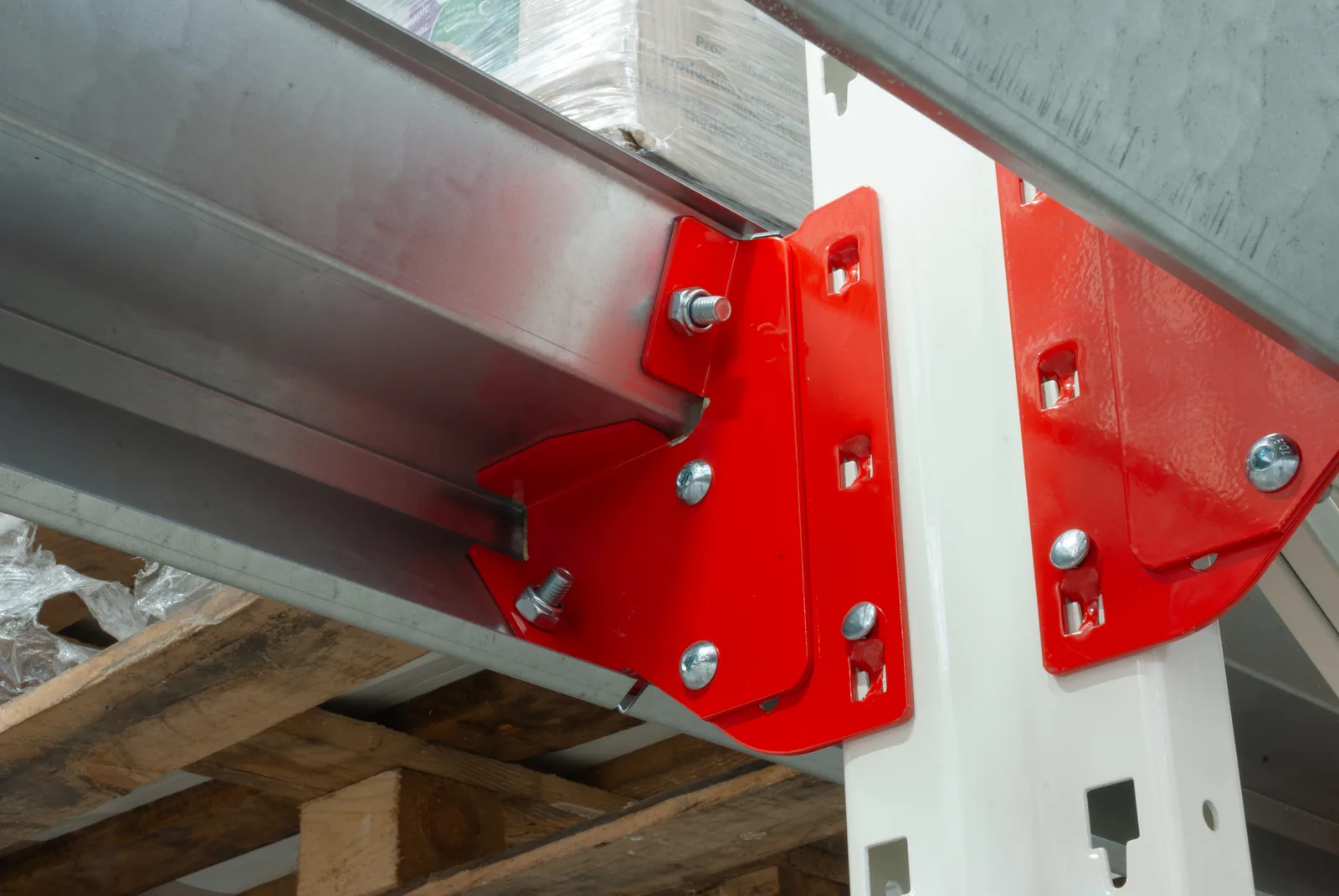
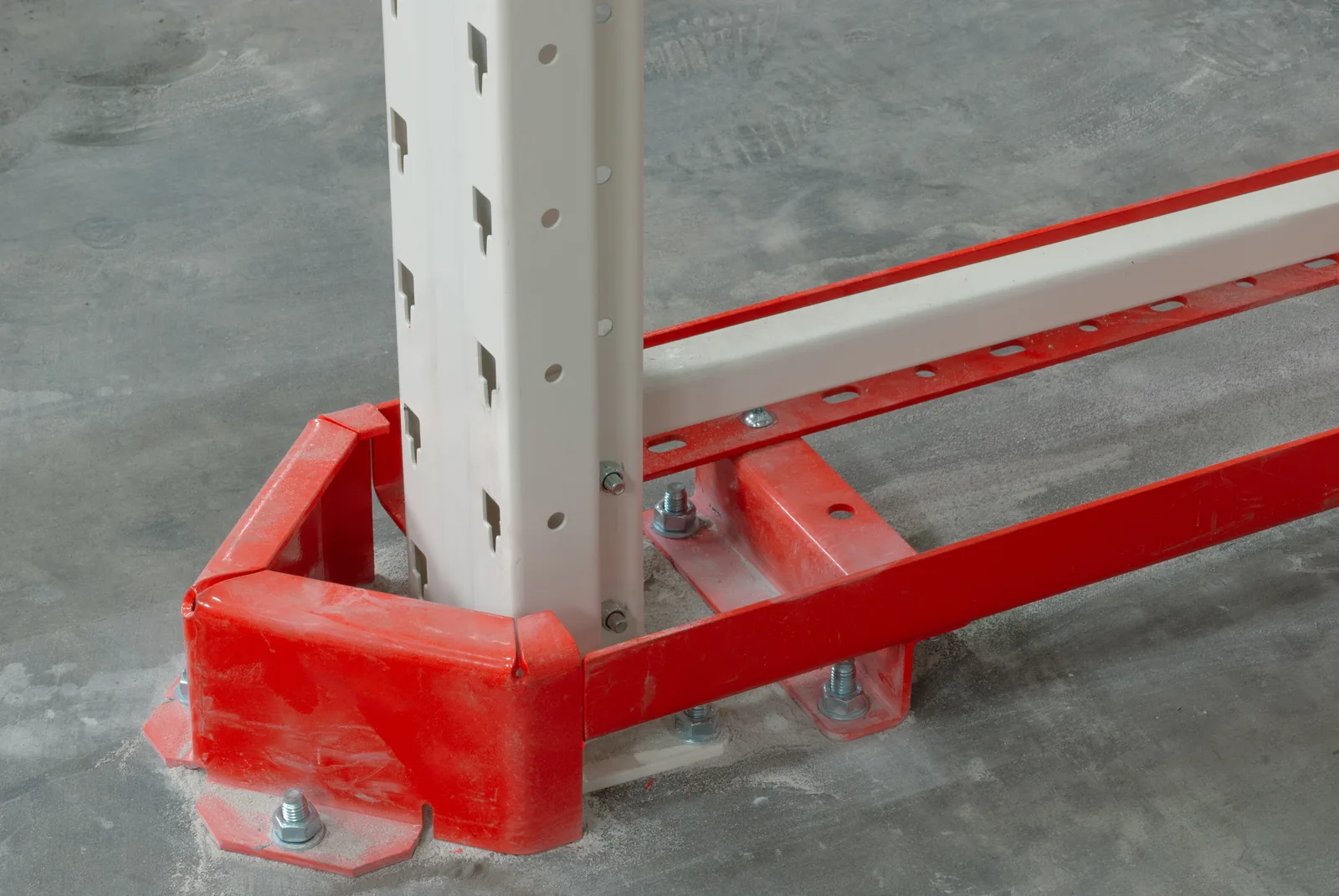
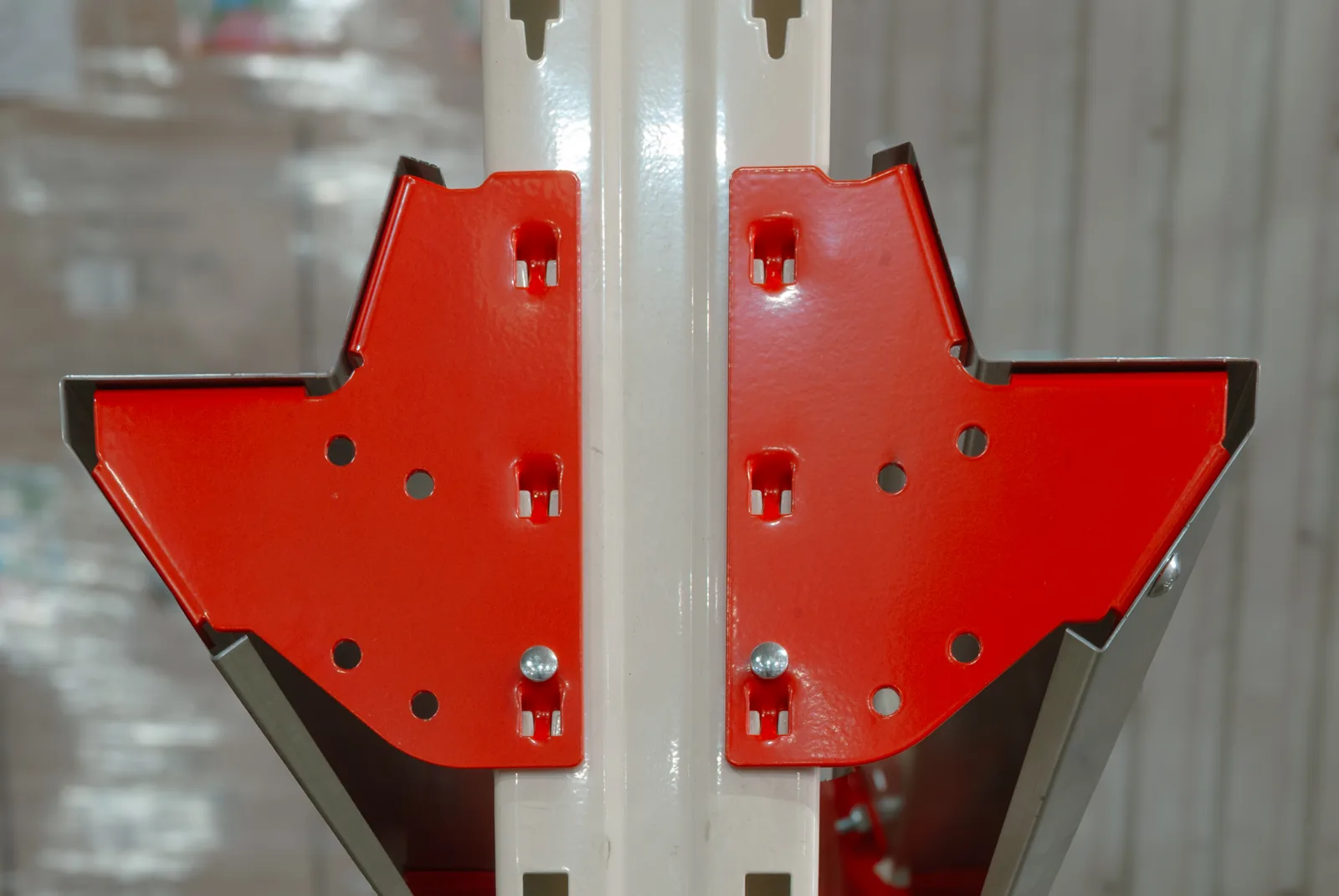
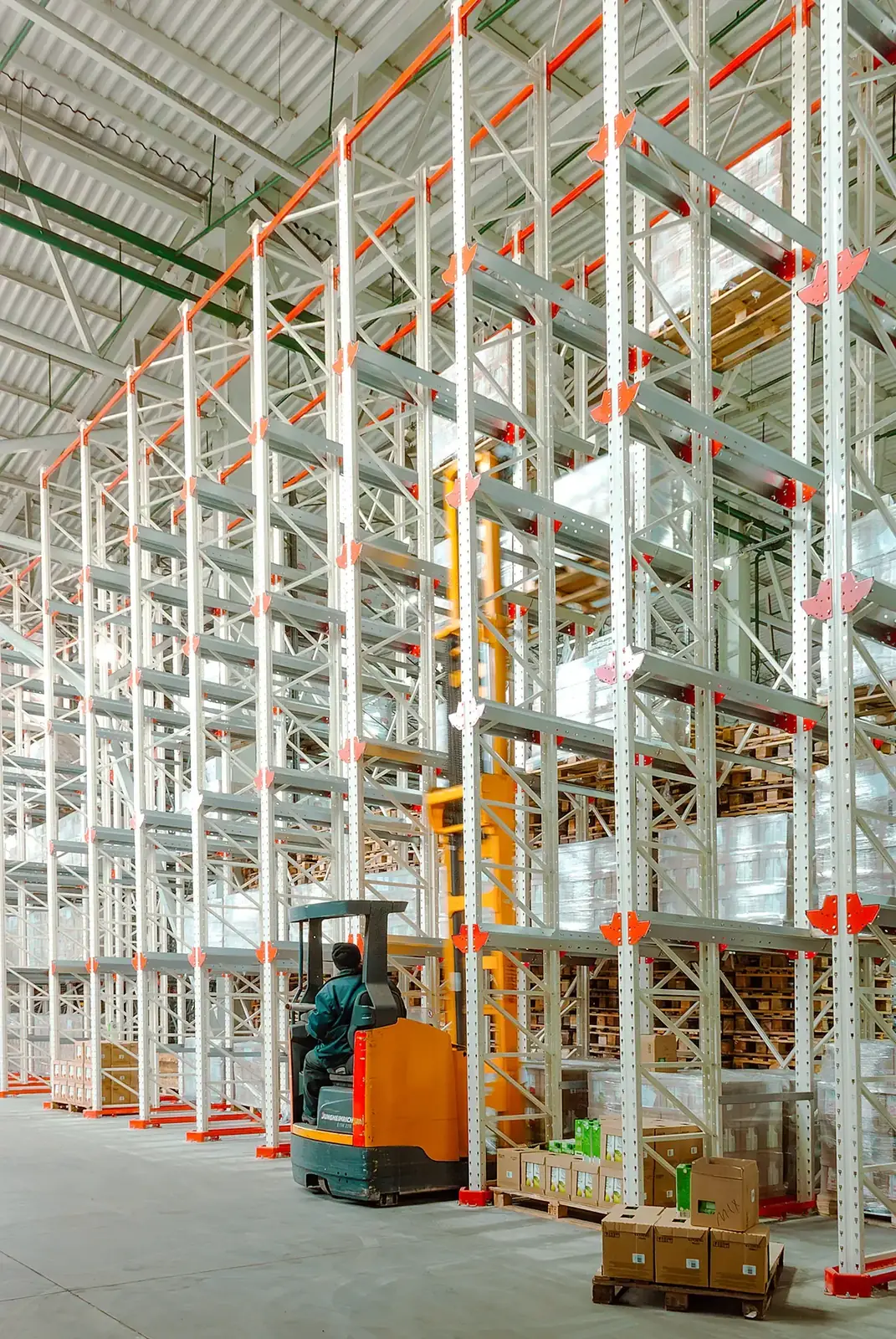
Drive-in (deep-lane) racking is a high-density pallet storage system with no aisles between rows. Depending on whether the lanes are entered from one side or both, it is called drive-in or drive-through racking. The structure is a rigid framework of upright frames forming lanes 1,350–1,450 mm wide: the forklift drives into the lane and places the pallet on guide rails. Racking of this design is widely used because it makes maximum use of warehouse volume.

In essence, drive-in racking is an improved form of block stacking, but with better access to goods and more reliable storage. That is why it is often used for long-term storage in cold rooms. The main advantage of drive-in racking is a very high level of warehouse volume utilisation – one of the best figures among all racking types.

We supply both standard kits and structures built to individual specifications: section length and lane depth are calculated to the customer's request.

Technical specifications

Structure heightup to 12,185 mm
Bay lengthto customer specification
Lane depthto customer specification
Load per pallet positionup to 2,000 kg
Lane width1,350–1,450 mm

Types of drive-in racking

Related services

  • Racking installation / dismantling
  • Warehouse compliance check
  • Racking repair
Most common
Get a price
Drive-in · LIFO

Single-entry drive-in racking (LIFO)

from 1,800 UAH per linear metre
  • Loaded from one side
  • One aisle for the forklift

The standard configuration is drive-in racking. It is loaded and unloaded from one side only and works on a first in, last out basis. This configuration does not offer high handling speed in a warehouse or production facility, but that drawback is offset by high storage density – a key factor in costly chilled and frozen storage. Levels are filled starting with the pallet positions furthest from the entrance, so the last pallets loaded stand next to the aisle and are taken out first.

When to choose it

  • Slow stock turnover
  • Batch deliveries for long-term storage
  • Freezer rooms and other warehouses where storage requires energy-intensive conditions
  • Goods that stay in the warehouse for a long time

Kit contents

  • Upright frames
  • Pallet guide rails
  • Top bracing
  • Rear bracing
  • Brackets
  • Top beams
  • Guide rail brackets
  • Top and bottom stops
  • Buffers
  • Fixing kit

Supplied knocked down, in bundles.
Get a price
Drive-through · FIFO

Drive-through racking (FIFO)

from 1,800 UAH per linear metre
  • Access from two opposite sides
  • Faster handling

A two-sided, pass-through configuration (drive-through). The loading and unloading zones are at opposite ends of the lane. Goods move on a first in, first out basis. This pallet storage arrangement can significantly increase handling speed. Drive-through racking makes sense for storing a single product line with a limited shelf life.

When to choose it

  • A single product line with a limited shelf life
  • Perishable products
  • Relatively fast stock turnover

Kit contents

  • Upright frames
  • Pallet guide rails
  • Top bracing
  • Brackets
  • Top beams
  • Guide rail brackets
  • Buffers
  • Fixing kit

Supplied knocked down, in bundles.
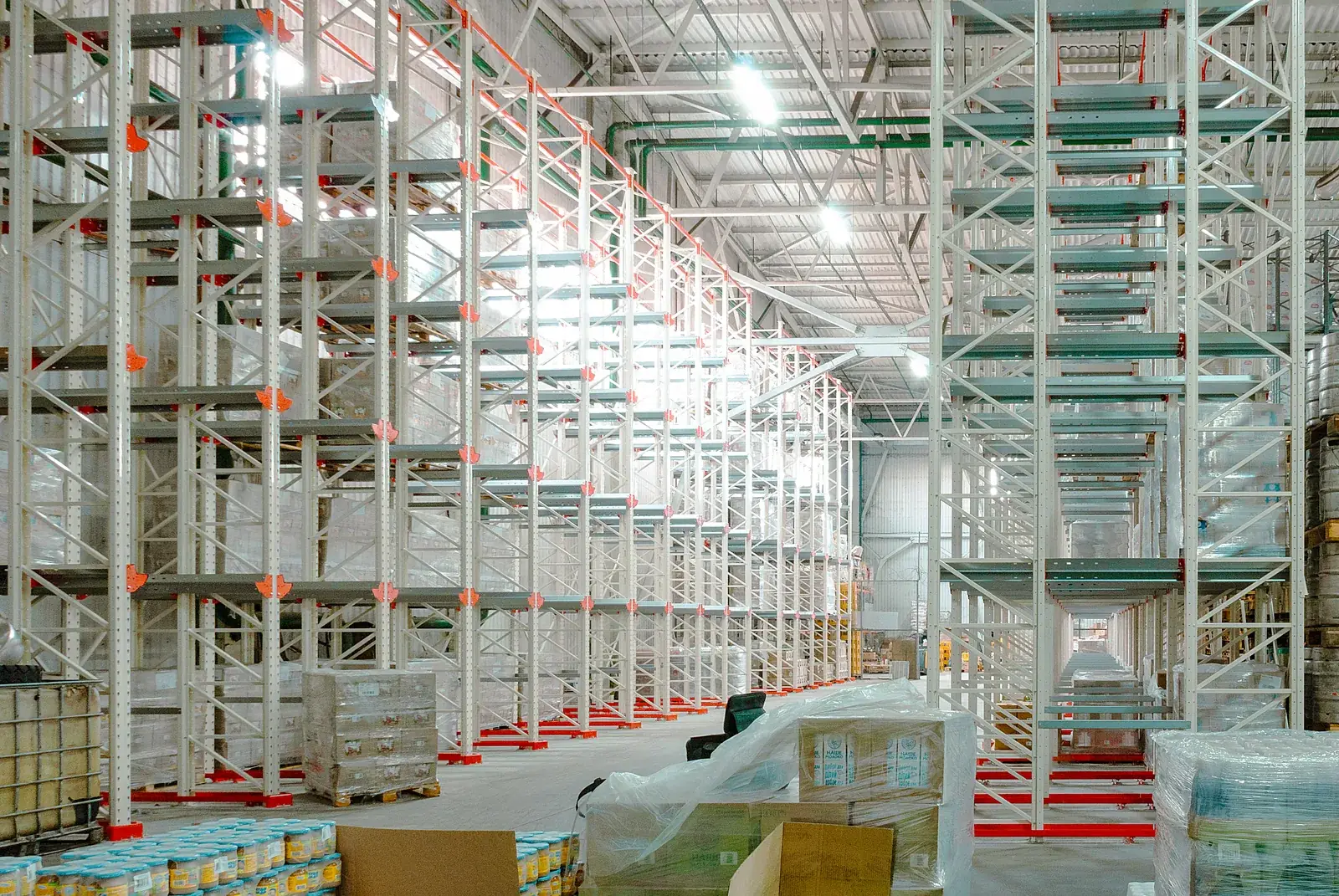
Additional components: structural elements for a false lane, brackets, bracing.

Protective elements – frame, upright and double-row protection – are not included in the price.

For all types

  • Standards DSTU EN 15620, 15635, 15629
  • TÜV Rheinland certificate of conformity
  • ISO 9001, 14001, 45001 (TÜV NORD)
  • Opinion of the State Service on Food Safety and Consumer Protection
  • Operating range from -30 to +50 °C
  • Made in Ukraine
  • 12-month warranty

Comparison: drive-in vs drive-through

Drive-in (LIFO)Drive-in (LIFO)from 1,800 UAH per linear metreGet a priceDrive-through (FIFO)Drive-through (FIFO)from 1,800 UAH per linear metreGet a price
PrincipleLIFO – last in, first outFIFO – first in, first out
AccessFrom one side, one aisleFrom two opposite sides
Handling speedLower, but maximum densityHigher
Best forLong-term storage, freezer roomsHomogeneous goods with a limited shelf life
Structure height2,127–12,185 mm
Lane width1,350–1,450 mm
Load per palletup to 2,000 kg
Lane depthto customer specification

OUR PROJECTS

Pallet warehouse fit-out: drive-in racking

More capacity: how drive-in racking changes the rules in logistics

Drive-in racking uses the full cubic volume of the building and raises pallet storage density to 80%. More pallets fit into the same volume and the cost per pallet position falls – which makes it the choice for companies that want to optimise space.

How it works

  1. LiftThe forklift raises the pallet to the required level
  2. Enter the laneThe truck drives inside the structure
  3. Set downThe pallet is lowered onto the guide rails on both sides of the level
  4. No aislesNo aisles are needed between rows – that floor area goes to storage
Up to 80% of warehouse volume

One of the best figures among all racking types.

Safe for unstable loads

Pallets that cannot be stacked on top of each other each sit on their own guide rails.

Standard forklifts

No special handling equipment is required.

Low costs

Installation and maintenance are inexpensive – one of the most cost-effective systems.

Advantages

  • Maximum compaction and space optimisation
  • Excellent stock control and well-organised logistics
  • Low installation and maintenance costs
  • Compatible with other storage systems
  • Up to 80% of available space utilised
  • Ideal for uniform loads with low turnover
  • Works with standard forklifts

Disadvantages

  • Drive-in works on LIFO, so it is not suitable for all goods
  • Risk of forklift damage to the racking due to tight space inside
  • Without accurate stock records, goods are easier to lose in drive-in racking
  • Access to pallets other than from the front may require double handling
  • If a lane is not filled from the back, gaps appear and capacity is lost

Main applications

A versatile system for managing stock on either a FIFO or a LIFO basis. We recommend it when:

  • Free space is limited or floor space is expensive
  • Homogeneous products of a single SKU, many pallets, slow turnover
  • Goods are stored for a long time (drive-in)
  • Perishable products with a limited shelf life (drive-through)
  • Direct access to individual loads is not required
  • Freezer rooms, where density and an even temperature matter

TOP LOGISTICS SOLUTIONS offers turnkey solutions – from drawings to implementation: a stand-alone racking system, part of a larger warehouse fit-out or reconstruction project, or advice as early as the selection and price analysis stage.

Calculate for my warehouse

Drive-in, selective or Double Deep

The three pallet systems differ in storage density and access to pallets. Drive-in racking pays off for uniform goods, selective racking for a wide product range, and Double Deep strikes a balance between access and capacity.

SystemPrincipleVolume useAccess to every palletEquipmentPrice from
Drive-in / drive-through rackingLIFO (drive-in) or FIFO (drive-through)up to 80% of warehouse volumeNo, only the outermost pallet in the laneStandard forklifts that drive into the lanefrom 1,800 UAH per linear metre
Selective pallet rackingAny picking order40–45% of warehouse volumeYes, direct accessAny forkliftfrom 500 UAH per linear metre
Double DeepLIFOHigher than selective racking: pallets two deep, half as many aislesFront pallet onlyReach trucks or forklifts with telescopic forks or a pantographfrom 500 UAH per linear metre

Layouts for selective and Double Deep racking are shown on the pallet racking page.

Works well with

What else you may need

Electric Forklifts Equipment Electric Forklifts Driving into drive-in racking lanes
Reach Trucks Equipment Reach Trucks Working at height in high-density storage
Pallet Racking Racking Pallet Racking Direct access to every pallet for fast-moving goods
How we work

From site survey to a ready-to-run warehouse

A transparent process, with no juggling between separate suppliers and installers. You know what is happening at every step.

Start with a consultation
01

Enquiry

We clarify your needs, advise and make a preliminary equipment selection.

02

Site survey

We measure and fully assess the warehouse: geometry, floor, aisles, work zones.

03

2D/3D design

We produce drawings, a layout plan and a specification.

04

Equipment selection

We select handling equipment and other equipment to suit the racking system.

05

Contract

We agree delivery and payment terms and sign the contract.

06

Manufacturing

We manufacture racking systems and automation equipment.

07

Delivery

We deliver structures and equipment to your site anywhere in Ukraine.

08

Installation and commissioning

We install the racking, set up and commission automation, and hand over a ready-to-run warehouse.

Estimate

Technical solution and cost estimate for your warehouse

A few short questions – an engineer will prepare a preliminary solution and an indicative cost for your warehouse.

  • A solution matched to your loads and building
  • Preliminary layout planning
  • No obligation – just a consultation
Step 1 of 4Choose an option
What does your warehouse need?
What exactly do you need?
What is the warehouse area?
Which services do you need? (select all that apply)
Where should we send the estimate?

By submitting this form, you agree to the processing of your personal data so that we can get back to you.

Frequently asked questions

When is drive-in racking more cost-effective than selective pallet racking?

Drive-in structures work best where you need to store large quantities of uniform products with low turnover and make maximum use of the building’s cubic volume. If direct access to every pallet matters and the product range changes often, pallet racking is the more logical choice.

Can drive-in storage be combined with multi-level solutions?

Yes. In buildings with high ceilings, a warehouse is sometimes designed so that some zones are dedicated to storage density and others to picking and manual handling of goods. In such cases, drive-in lanes are complemented by a multi-level structure that makes it easy to organise aisles and work areas – for example, a warehouse mezzanine.

Which warehouses are drive-in racking systems suitable for?

Drive-in racking is best suited to homogeneous products of a single SKU with a large number of pallets and slow turnover, to goods stored for a long time and to freezer rooms where space needs to be compacted. Read more in the article “Drive-in racking: which warehouses it suits and what advantages it offers”.

How much of the usable warehouse volume does drive-in racking use?

Up to 80%. This is one of the best figures among all racking types: there are no aisles between rows, the forklift drives inside the structure and the freed-up floor area goes to storage.

Does drive-in racking work on a LIFO or FIFO basis?

It depends on the configuration. Drive-in racking is loaded and unloaded from one side, so it works on LIFO – last in, first out. Drive-through racking has access from two sides and works on FIFO – first in, first out.

Is drive-in racking expensive compared with other high-density storage systems?

No, it is the most affordable high-density storage system. Prices start from 1,800 UAH per linear metre, installation and maintenance costs are low, and it can be operated with standard forklifts without special equipment.

Can drive-in racking be reconfigured or relocated?

Yes. The structure is bolt-together, supplied knocked down in bundles and compatible with other storage systems, so it stays versatile and easy to resell – it can be reconfigured for new warehouse tasks.

Call Calculate cost