


Pallet Racking: Types, Specifications and How to Choose the Right System for Your Warehouse
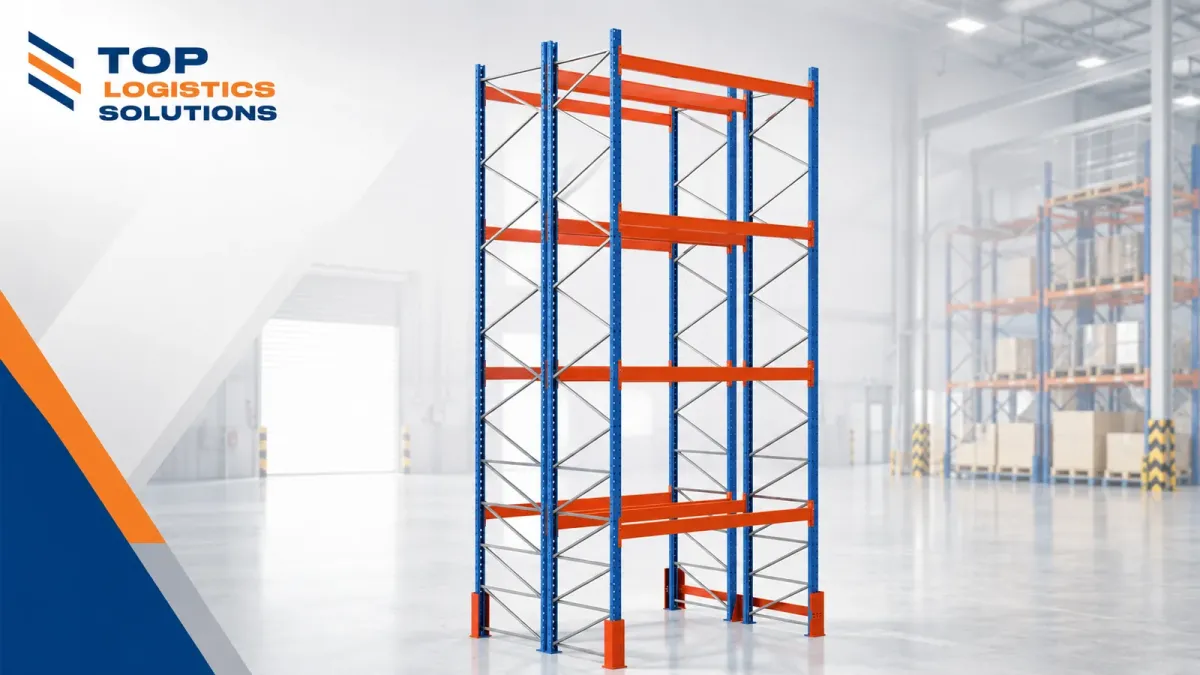
Pallet racking defines how palletised goods are stored, how quickly stock can be accessed and how wide the working aisles are. The choice of system depends on pallet weight, building height, the type of handling equipment, the number of SKUs and daily throughput.
Main types of pallet racking
Pallet racking is selected according to storage density, pallet access and the logic of product movement:
- Selective systems. Every pallet is directly accessible from the working aisle. This format suits warehouses with a large number of SKUs, regular picking and frequent dispatches.
- Double Deep. Pallets are stored two deep. The system increases the number of pallet positions and works with a reach truck equipped with telescopic forks.
- Drive-in. The forklift drives into the racking lane. Drive-in is the best choice for large batches of uniform goods, cold stores and seasonal storage.
- Pallet flow systems. Pallets move along roller lanes from the loading side to the picking side. The layout supports FIFO and a steady rotation of batches.
- Mobile systems. Racking blocks move on rails. This layout delivers high storage density by reducing the number of permanent aisles.
Once you have chosen the system type, calculate pallet positions separately for fast-moving goods, batch stock and reserve stock. For selective racking, define the working aisle width for the specific equipment model; for drive-in, fix the LIFO or FIFO scheme; for pallet flow systems, separate the loading and picking zones from the outset. This calculation shows the number of positions on each level, the required beam height, the permissible pallet weight and the actual throughput of the storage zone.
 Equipment from this articlePallet RackingView category
Specifications that affect the choice
To choose the right pallet racking, clearly define the technical parameters of the warehouse, the load and the equipment, so that the upright frame design, level heights, number of pallet positions and aisle layout are optimal.
Parameter | What to record | What it determines |
Pallet weight | Maximum weight of a pallet with goods and packaging, plus a margin for peak batches | Upright section, beam type, permissible load per level |
Warehouse height | Clear height to trusses, light fittings, ventilation, sprinklers and doors | Number of levels, beam heights, operating clearance for equipment |
Type of equipment | Forklift model, lift height, turning radius, fork type | Aisle width, racking depth, access to upper levels |
Number of SKUs | Number of items, turnover, picking frequency, need for direct access | System type, number of locations, product placement scheme |
Type of goods | Dimensions, packaging type, load stability, batch sizes, temperature conditions | Storage format, protection, stops, level requirements |
How to choose a pallet racking system for your warehouse?
Start with the load parameters. In a warehouse with active picking, access to every pallet is the priority; for batch storage, it is the number of pallet positions on the available floor area.
- Record the weight of the heaviest pallet, including goods and packaging.
- Measure the clear height to trusses, lighting, ventilation and sprinklers.
- Specify the type of handling equipment and the minimum working aisle width.
- Group goods by turnover, batches, dimensions and access requirements.
- Compare selective, Double Deep, drive-in, pallet flow and mobile systems.
- Prepare a layout of the receiving, storage, picking and dispatch zones.
In projects by TOP Logistics Solutions, a Ukrainian integrator of modern warehouse solutions, pallet racking is selected based on equipment specifications, aisle width, lift height and the route of load movement. This calculation determines the number of pallet positions, a safe traffic layout for equipment and the capacity reserve for scaling the warehouse.
CategoryPallet RackingSelective pallet racking: design, manufacturing and installation for your loads and equipment.View category
 CategoryDrive-in RackingMore pallet positions in the same floor space for uniform goods.View category
 CategoryReach TrucksEquipment for high pallet racking and narrow aisles.View category
 CategoryGravity Roller ConveyorsGoods move under their own weight, with no electricity.View category
Show us your warehouse.
We’ll take a look, then show you how to improve it
Leave your contact details and briefly describe the task. A TOP Logistics Solutions specialist will contact you, clarify the details and propose the next step.