


Types of Warehouse Racking: A Complete Guide for Warehouse Owners in 2026
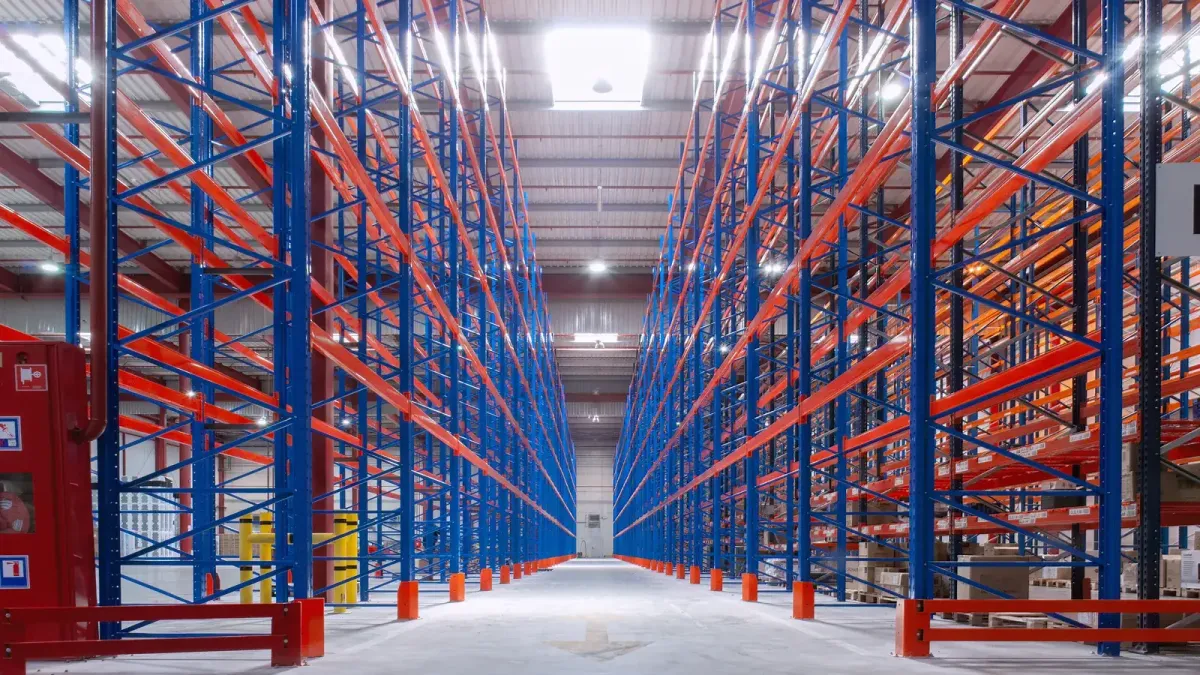
In 2026, a warehouse is no longer just a place to store goods. It is a fully fledged logistics centre where every minute counts. The choice of racking system has a direct impact on performance: from order picking speed to staff costs and floor-space rent.
Racking has become the backbone of modern logistics. It determines how fast the warehouse operates, whether it is ready for automation and whether the business can scale without chaos.
Warehouse racking in 2026: the role it plays
Racking defines the architecture of a warehouse. It sets the logic of product flow and affects operating speed and cost levels. If the system is chosen incorrectly, automation will not work efficiently. Conveyors, roller conveyors and sorters cannot do their job without a clear storage structure.
That is whywarehouse racking has become a basic element of any modern logistics infrastructure.
 Equipment from this articlePallet RackingView category
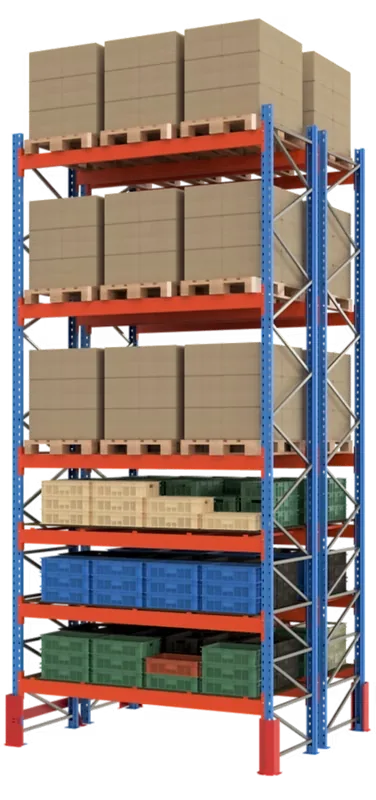
Pallet racking – a versatile solution for most warehouses
Pallet racking is the most common type of system. It suits warehouses with a wide product range, where fast access and stock control matter.
Pallet systems are easy to use, integrate readily with automated processes and allow the warehouse to scale quickly. However, if you need to store a very large volume of goods in a small space, their efficiency drops.
Advantages and limitations of pallet racking
Advantages | Limitations |
Versatility | Lower storage density |
Simple stock accounting | Not always optimal for slow-moving goods |
Easy integration with automation | Require more floor space |
Drive-in racking for high-density storage
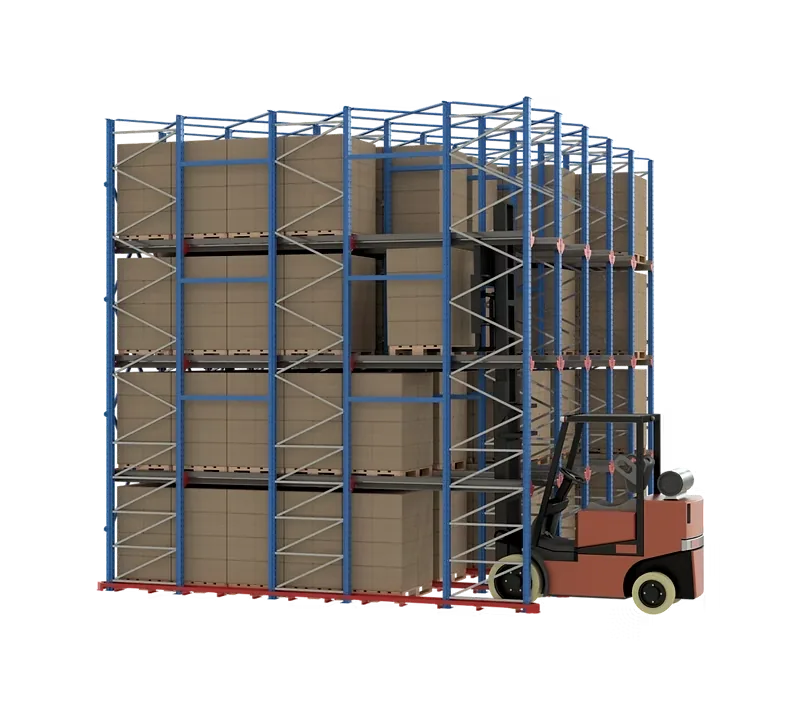
Drive-in racking is designed to save as much floor space as possible. It works on a “goods in depth” principle and suits uniform, fast-moving loads.
This solution is ideal for the food industry, FMCG and other sectors where goods move quickly. The main benefit is space saving and lower costs for renting or building new premises. A common mistake companies make is using drive-in systems for slow-moving goods. In that case, access to products becomes harder and picking time increases.
Mezzanine racking and multi-level storage
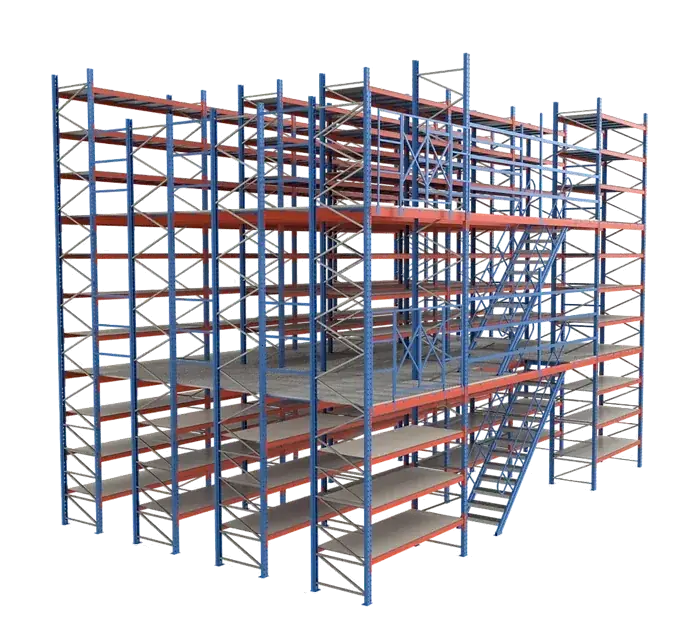
Mezzanine racking is the answer for warehouses with limited floor area but enough height to work on several levels. It creates multi-level storage and picking zones, which is especially relevant for distribution and manufacturing with a wide range of small items.
Mezzanine systems combine easily with both manual processes and automated solutions. This gives flexibility and the ability to scale the warehouse without a complete rebuild.
Where mezzanine racking works best:
- Manufacturing – efficient use of floor space.
- Distribution – fast access to small SKUs.
- Automation – integration with robotic systems.
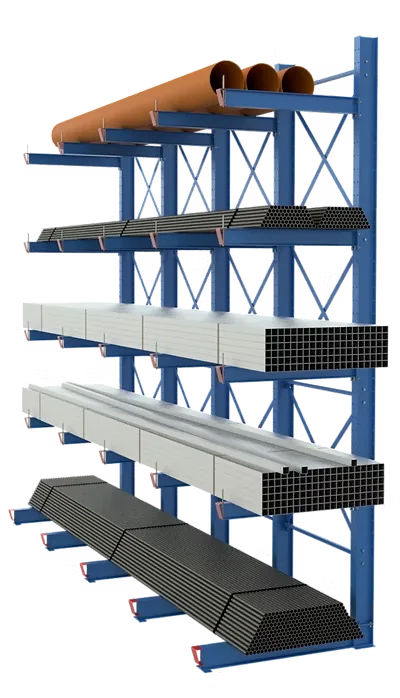
Cantilever racking for long and non-standard loads
Cantilever racking is designed for pipes, profiles, timber and other long loads. Standard systems do not work here, as they do not provide safe access or optimal use of space.
Cantilever structures let you organise storage so that the risk of damage to goods is minimised and loading and unloading are fast.
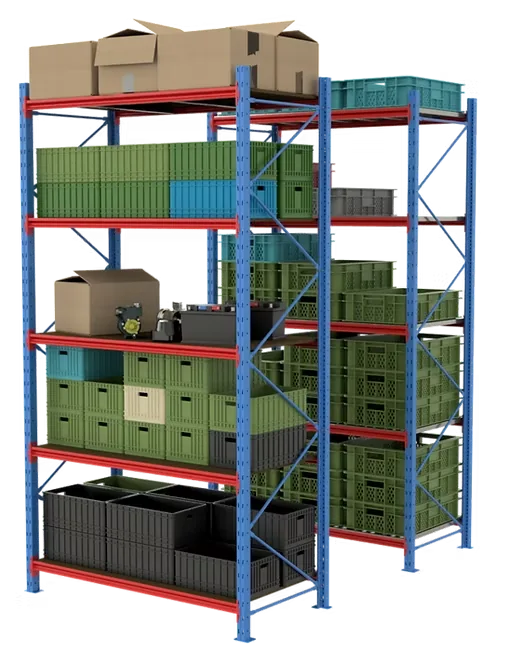
Shelving for manual picking and small items
Shelving is indispensable in picking zones. It ensures fast manual picking and convenience for staff.
These systems are often combined with pallet or mezzanine racking to create a complete solution for warehouses handling different types of goods.
How to choose a racking type for real warehouse conditions
Choosing racking is always a balance between business needs and what the building allows.
Key racking selection criteria:
Criterion | Impact |
Type of goods | Determines the racking design |
Turnover | Affects access speed |
Floor area and height | Shape the warehouse architecture |
Growth prospects | Determine scalability |
There is no one-size-fits-all solution. Every warehouse has its own specifics, and they are what dictate the choice.
Common mistakes when choosing warehouse racking
- Focusing on price alone.
- Ignoring future business growth.
- Incorrect load calculations.
- No systematic layout design.
Warehouse racking as a long-term investment
Racking is a strategic investment. It optimises floor space, gives you control over logistics and prepares the warehouse for automation. A well-chosen system lowers operating costs and keeps the business stable in the long term.
Frequently asked questions
Which warehouse racking is the most versatile in 2026?
Pallet systems usually remain the most versatile solution, but they are best combined with other types.
Can different types of racking be combined in one warehouse?
Yes, this helps optimise space and improve warehouse efficiency.
How can a warehouse be prepared for expansion without dismantling the racking?
Choose systems that scale vertically or modularly, such as mezzanines.
When should old racking systems be replaced?
When they no longer meet the load requirements, cannot be integrated with automation or pose safety risks.
CategoryPallet RackingSelective pallet racking: design, manufacturing and installation for your loads and equipment.View category
 CategoryDrive-in RackingMore pallet positions in the same floor space for uniform goods.View category
 CategoryMezzaninesAn extra warehouse level in the same footprint.View category
 CategoryCantilever RackingFor long loads: rolled metal, pipes, timber.View category
 CategoryShelvingFor manual storage of boxes and individual items.View category
Show us your warehouse.
We’ll take a look, then show you how to improve it
Leave your contact details and briefly describe the task. A TOP Logistics Solutions specialist will contact you, clarify the details and propose the next step.