


Warehouse Racking: How to Calculate Quantity and Plan the Layout
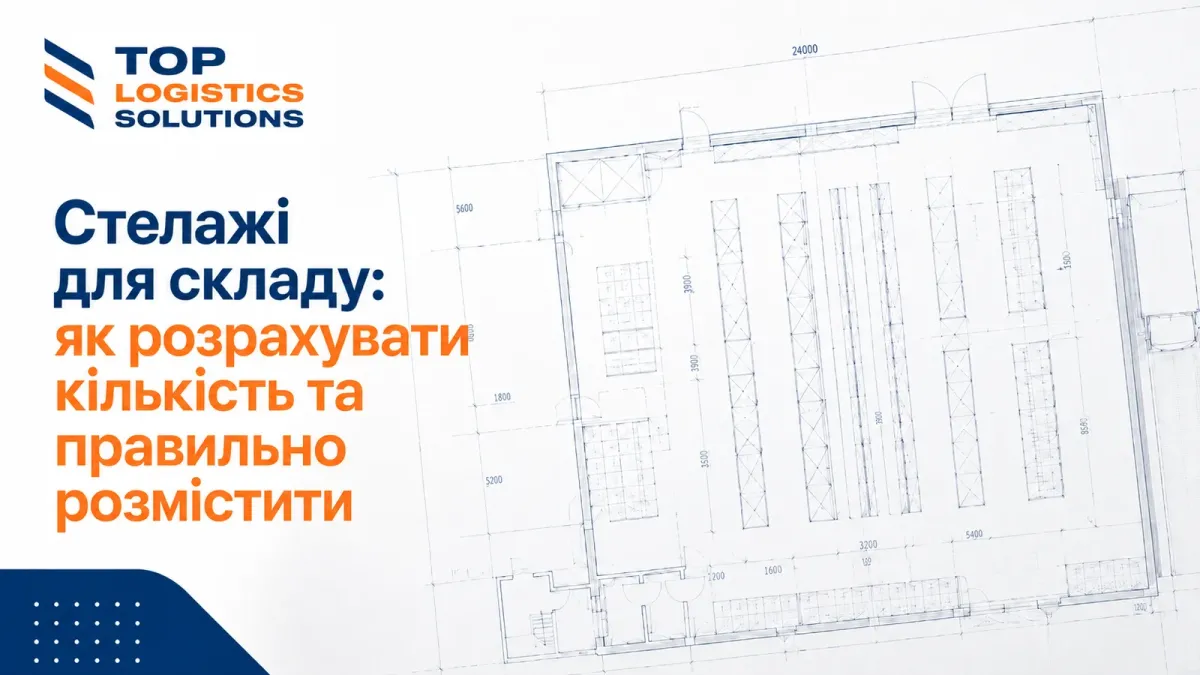
Warehouse racking should be selected according to the load, the usable floor area, the building height and the model of equipment that will operate between the rows. A sound layout takes into account the number of pallet positions, aisle widths, manoeuvring areas and a reserve for peak batches.
What data do you need for the calculation?
Warehouse racking requires accurate input data to select upright frames, beams, levels and the layout. Prepare the data that affects capacity, loads and equipment movement:
- length, width and clear height of the building;
- pallet sizes: EUR, FIN or non-standard containers;
- maximum pallet weight including goods and packaging;
- number of SKUs, turnover and picking frequency;
- daily receiving and dispatch volumes;
- equipment model, lift height and turning radius;
- location of doors, columns, loading docks, sprinklers and fire exits;
- reserve for seasonal stock, returns or a growing product range.
Separately mark the areas where equipment turns, picks up pallets from the floor or hands goods over to picking. These areas affect the length of the rows, the number of bays and the actual throughput of the warehouse.
 Equipment from this articleWarehouse RackingView category
How to calculate bays and pallet positions?
Take as your basis the maximum number of pallets in storage at the same time. Then convert this requirement into bays, levels and rows of warehouse racking.
- Determine the peak number of pallets, including seasonal batches.
- Group goods by category, turnover and access requirements.
- Fix the number of pallets per level in one bay.
- Calculate the number of levels the clear height allows.
- Multiply the positions per bay level by the number of levels.
- Add a reserve for returns, safety stock and expansion.
Example: a warehouse needs to store 480 pallets at the same time. One bay holds 3 pallets per level, and the height allows 4 levels. Each bay has 12 pallet positions, so the base requirement is 40 bays. A 15% reserve adds another 6 bays, so the planned total is 46 bays.
Specialists at TOP Logistics Solutions advise starting such tasks by fixing the forklift route, aisle widths, end-of-aisle protection and the location of work areas. After that, the number of bays should be linked to receiving, storage, picking, dispatch and a reserve for future expansion.
How to lay out racking before you buy?
If you plan to buy warehouse racking in Ukraine, first draw the rows on a floor plan showing doors, columns, loading docks, fire exits and temporary staging areas. Place fast-moving goods closer to picking and dispatch, and reserve pallets on the upper levels or in the more distant zones.
Put heavy loads on the lower levels, with beams and upright frames calculated separately. Protection is needed at the ends of rows, at corners, next to columns and wherever forklift traffic is heavy.
The finished layout should show the number of bays, pallet positions and levels, aisle widths, the equipment route and risk points near work areas. Then enter the level heights, beam type, fixings, protective elements and installation sequence into the specification.
Before approving the warehouse racking layout, walk the forklift route from receiving to each row, the picking zone and dispatch. On the plan, separately mark turning areas, temporary pallet staging, charging points for electric equipment, access to fire-fighting equipment and the service aisle along the walls. This check will immediately show where you need to shorten a row, shift a bay, add protection or leave a wider aisle for peak loads.
CategoryWarehouse RackingPallet, shelving, cantilever and drive-in racking and mezzanines for your loads.View category
 CategoryPallet RackingSelective pallet racking: design, manufacturing and installation for your loads and equipment.View category
 CategoryShelvingFor manual storage of boxes and individual items.View category
Show us your warehouse.
We’ll take a look, then show you how to improve it
Leave your contact details and briefly describe the task. A TOP Logistics Solutions specialist will contact you, clarify the details and propose the next step.