


Warehouse Dismantling and Relocation: A Step-by-Step Moving Checklist
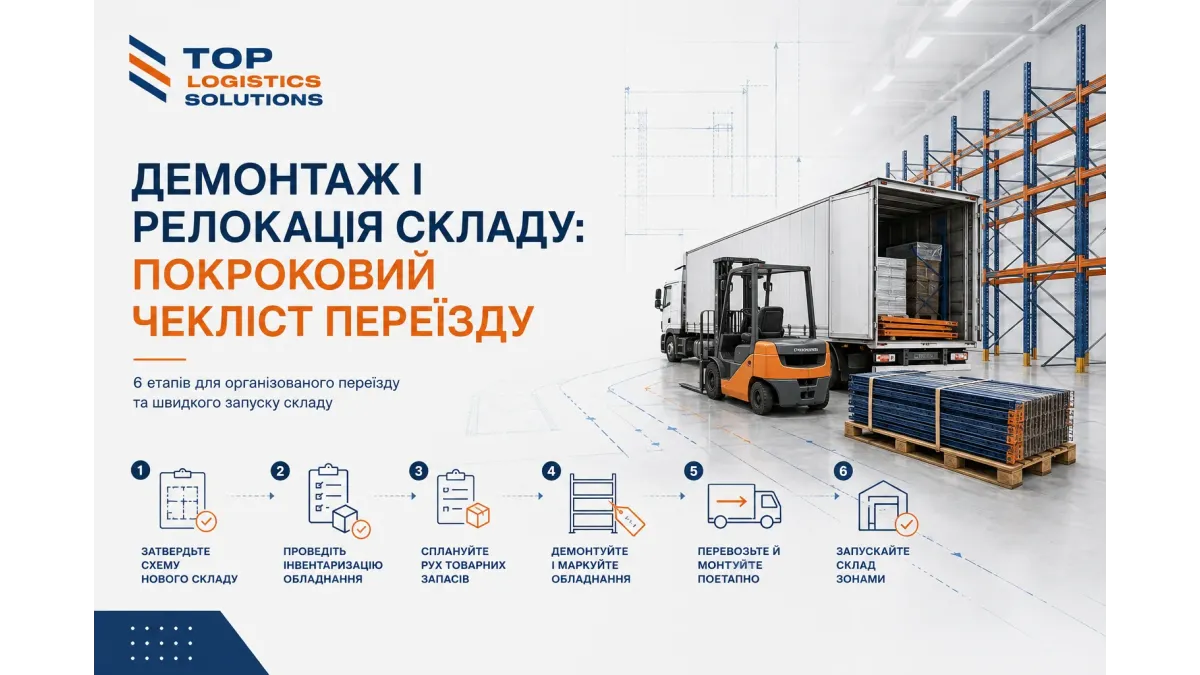
Start a warehouse relocation with the design of the new site. Before dismantling, you need to decide which equipment is moving, where it will be installed and in what order the zones will be brought into operation.
Split the move itself into separate phases so that operations stay under control. Below is a checklist with the sequence of work and the checkpoints that have to be closed at each stage.
Warehouse relocation checklist: 6 consecutive stages
A relocation follows a clear sequence, from site preparation to start-up. For pallet racking, before work begins, check the new configuration against the loads, the floor characteristics and the handling equipment. These parameters determine whether the existing system can be moved without changing its working configuration.
The sequence:
- Approve the layout of the new warehouse. Define the receiving and dispatch areas, storage locations, the position of rows and the working aisles. Assess your existing warehouse racking against this layout: the old system geometry has to fit the new product flow.Checkpoint: for every system, the installation location, required capacity and compatible handling equipment are known.
- Take an inventory of the equipment. Record the manufacturer, system type, number of upright frames and beams, completeness and the condition of components. Inspect the structures before the move and document their condition, as additional damage also occurs during dismantling, packing, loading or transport.Checkpoint: every set has an identifier, photos, a condition description and a decision on its further use.
- Plan the movement of stock. Identify the priority items, the temporary storage location and the date from which the new site takes over dispatch. A separate stock placement plan for the period of the move resolves one of the main organisational tasks of a relocation.Checkpoint: every batch has a defined route from its old storage location to a specific zone of the new warehouse.
- Dismantle and label the equipment by zone. Tie the dismantling sequence to the future installation. Labelling by row, bay and level reduces the time spent sorting parts after delivery.Checkpoint: the code on each batch of components clearly indicates its place in the approved layout of the new warehouse.
- Transport and install in phases. Deliver the dismantled equipment in phases directly to installation zones that are ready. This way, parts are moved around less inside the new building, and the installation crew receives the right set in the planned sequence.Checkpoint: the next batch is dispatched only after its installation zone has been confirmed as ready.
- Bring the warehouse into operation zone by zone. After installation, check the actual configuration against the design, the completeness of the system, the working aisles and whether the area is ready for loading. Move goods into a zone that has already been accepted, then open the next phase.Checkpoint: for every zone, the point at which installation ends and work with goods begins is defined in advance.
 Equipment from this articleWarehouse RackingView category
How to reduce downtime during relocation
Downtime is reduced by a phased start-up, in which the old and new sites run operations in parallel for a period. To minimise lost time, form the moving phases according to the role of the stock in the product flow and the need for specific operations. Start with the areas without which receiving and dispatch cannot work, as well as the zones holding the fastest-moving items. Move slow-moving stock and reserve bays in later waves.
For management, the key control indicator is the date by which the warehouse regains its required throughput after the relocation begins. Tie it to the planned order volume. This way, the moving schedule shows the exact point at which the warehouse returns to planned productivity.

Show us your warehouse.
We’ll take a look, then show you how to improve it
Leave your contact details and briefly describe the task. A TOP Logistics Solutions specialist will contact you, clarify the details and propose the next step.