


Electric Stackers for Warehouses: Types, Specifications and How to Choose
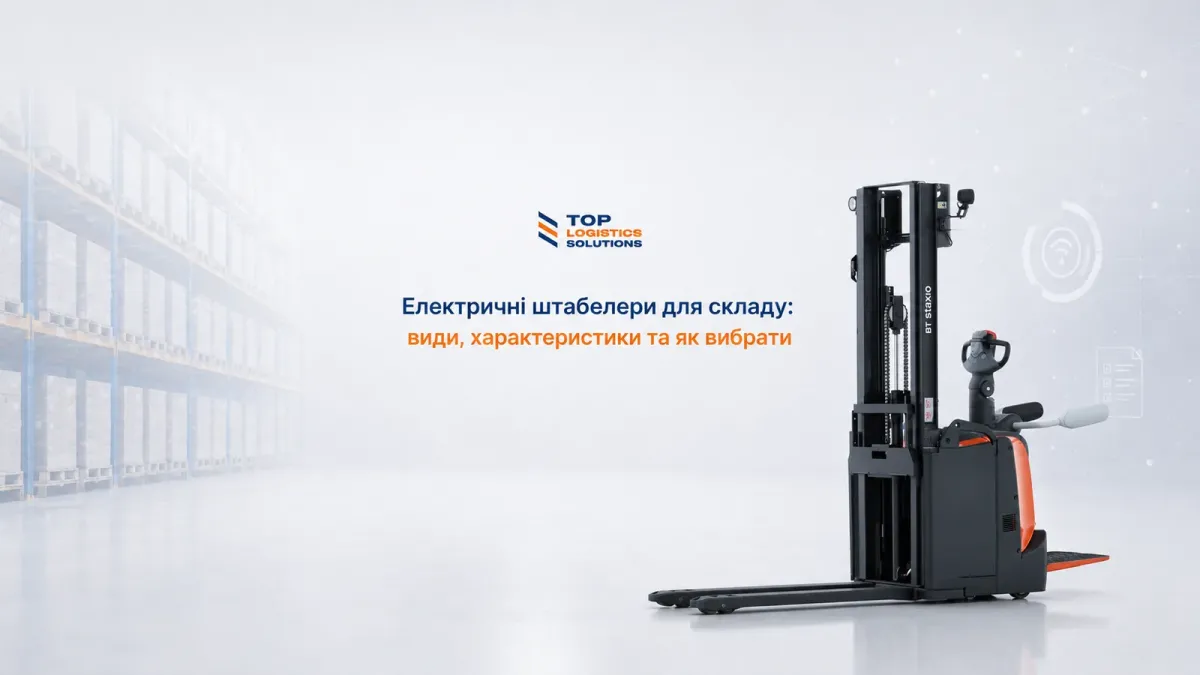
A warehouse needs an electric stacker when pallets are regularly lifted onto racking levels, moved between zones and placed in aisles where space is tight. Choosing the wrong model slows operations down: the operator makes unnecessary manoeuvres, the battery runs flat before the end of the shift, and the load capacity at the top level cannot handle the actual pallet weight.
What tasks does an electric stacker perform?
An electric stacker is bought for operations that require a manoeuvrable machine, precise pallet lifting and a steady pace of work without long breaks. Before choosing a model, you need to understand exactly what your material handling equipment will do every day:
- Lifting pallets onto racking. The stacker places loads on the lower and middle levels of a pallet racking system. For high levels, what matters is the residual load capacity, not just the maximum rated capacity.
- Moving loads between zones. The machine carries pallets from receiving to storage, picking or dispatch. A pedestrian model is enough for short routes; longer runs require an operator platform.
- Working in narrow aisles. A compact chassis makes it possible to work between rows where a conventional forklift needs a wider aisle. Before choosing, record the actual aisle width and turning areas.
- Replenishing picking zones. The stacker quickly brings pallets from reserve storage to picking areas. This scenario is typical of warehouses with regular picking of cartons, boxes or consolidated orders.
- Serving internal routes. Electric equipment works indoors on level floors. Ramps, thresholds and uneven surfaces require a model with suitable ground clearance and a stable mast.
 Equipment from this articleElectric StackersView category
Main types of electric stackers
Stacker type | Typical tasks | What to check |
Pedestrian | Short routes, work at the racking | Lift height, battery, aisle |
Self-propelled | Regular pallet movement between zones | Load capacity, speed, battery life |
Platform | Longer routes throughout the shift | Operator comfort, brakes, dimensions |
Cab | Intensive work over large areas | Visibility, protection, shift pattern |
With initial lift | Ramps, thresholds, uneven areas | Ground clearance, stability, type of load |
Rated load capacity shows what the machine can handle at base level. When working with racking, always check the residual load capacity at the required lift height, because a pallet on the fourth level puts a different load on the mast.
Checklist for choosing a warehouse stacker
A warehouse stacker is selected according to the actual pallet weight, lift height, working route and the number of operations per shift. To get it right, follow these steps:
- Record the maximum pallet weight including goods and packaging.
- Identify the highest level on which the operator places loads.
- Check the residual load capacity at that height.
- Measure aisle widths, turning areas and buffer zones.
- Count the number of lifts and movements per shift.
- Assess the floor, slopes, thresholds, ramps and floor joints.
- Plan the charging area, charging schedule and access to a power socket.
If you find it difficult to define how the stacker will be used in your warehouse, entrust the task to a professional warehouse solutions integrator such as TOP Logistics Solutions. The company will take into account the racking layout, aisle widths and the parameters of the charging area for electric equipment when selecting a stacker. This is the best approach for warehouses where equipment handles pallets on different levels and routes every day.
Material handling equipment must also match the weight of the load, the storage height, the condition of the floor, the pace of the shift and the space available between rows. Before purchasing, include these parameters in the technical specification and compare them with the specifications of the particular model.
 In stock

Show us your warehouse.
We’ll take a look, then show you how to improve it
Leave your contact details and briefly describe the task. A TOP Logistics Solutions specialist will contact you, clarify the details and propose the next step.